

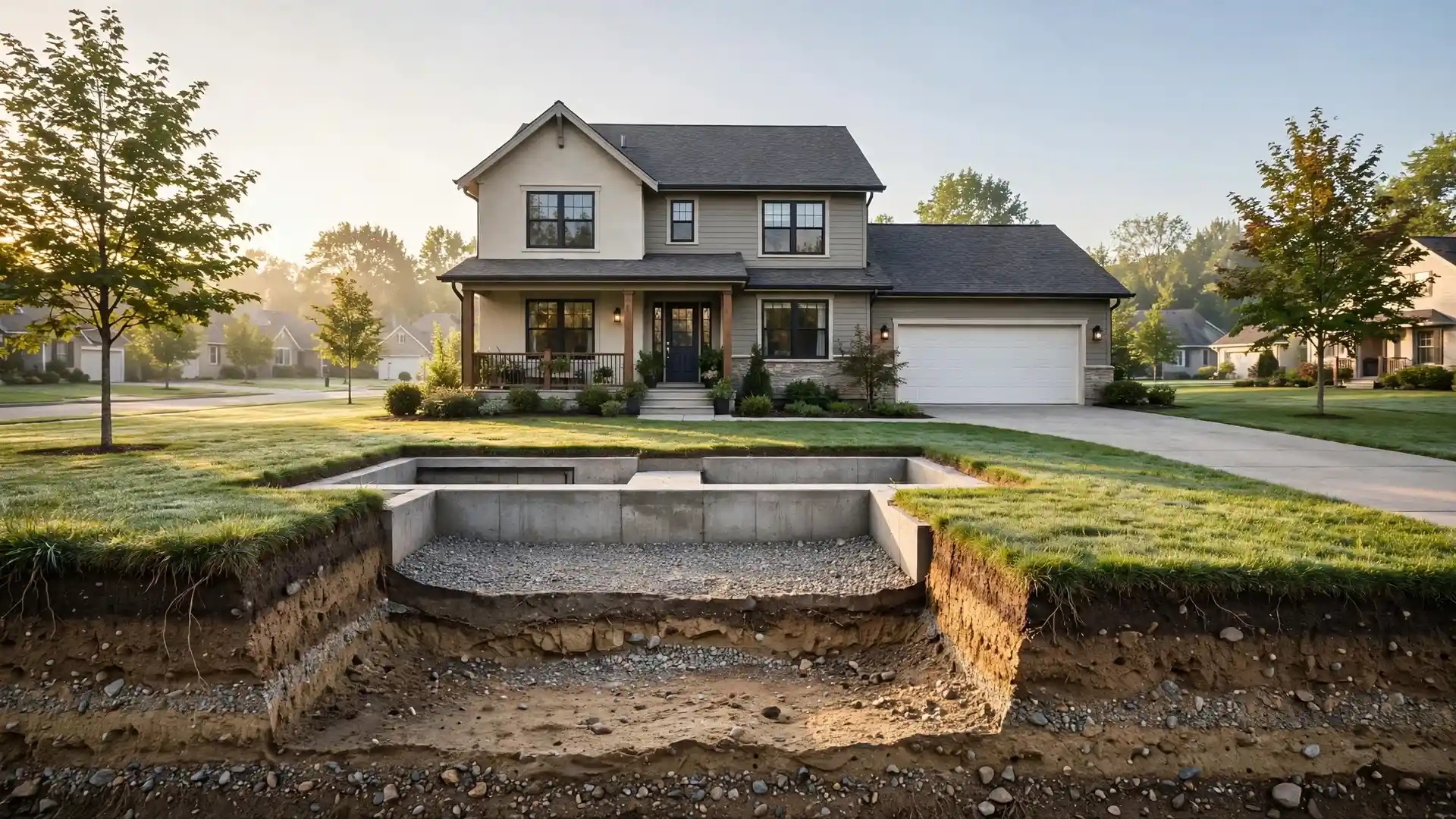
Your home’s foundation relies on the soil beneath it for support. When that soil shifts, compresses, expands, or washes away, the foundation may begin to move. Soil settlement is one common cause of foundation movement, but expansive soil, erosion, and poor drainage can also affect structural stability.
Some changes in the ground occur naturally and cause little or no damage. Others create uneven pressure beneath a building, contributing to foundation cracks, sloping floors, sticking doors, and other warning signs.
Understanding how soil behaves can help you recognize potential foundation problems before they become more difficult to address. It can also help you understand why the right repair depends on identifying the underlying cause rather than simply fixing visible damage.
Can Soil Conditions Cause Foundation Problems?
Yes. Soil conditions can cause foundation problems when the ground beneath or around a structure changes in ways that affect its support.
A foundation transfers the weight of a building into the soil. If the ground cannot support that weight consistently, different parts of the structure may settle, lift, or shift.
Several factors influence how soil supports a foundation, including its composition, density, moisture content, drainage characteristics, and the weight of the building.
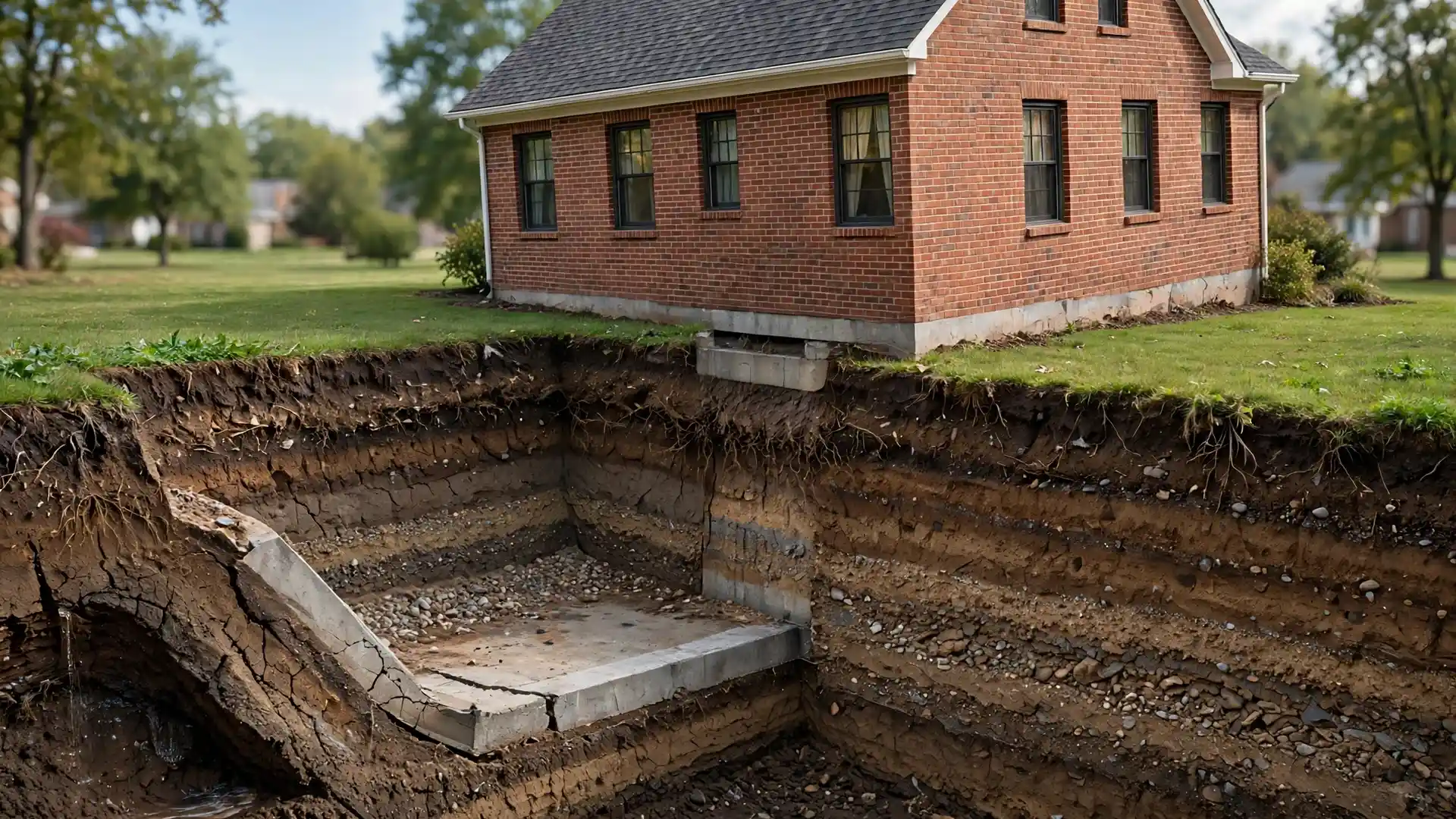
For example, imagine a home built on soil that was not adequately compacted during construction. Over time, the ground beneath one section of the foundation may compress more than the surrounding soil. That uneven movement can place additional stress on the concrete foundation and walls above it.
However, not every change in the ground causes structural damage. The amount, direction, and distribution of movement determine whether the foundation is likely to experience problems.
Understanding the soil type is an important starting point.
How Different Soil Types Affect Foundation Stability
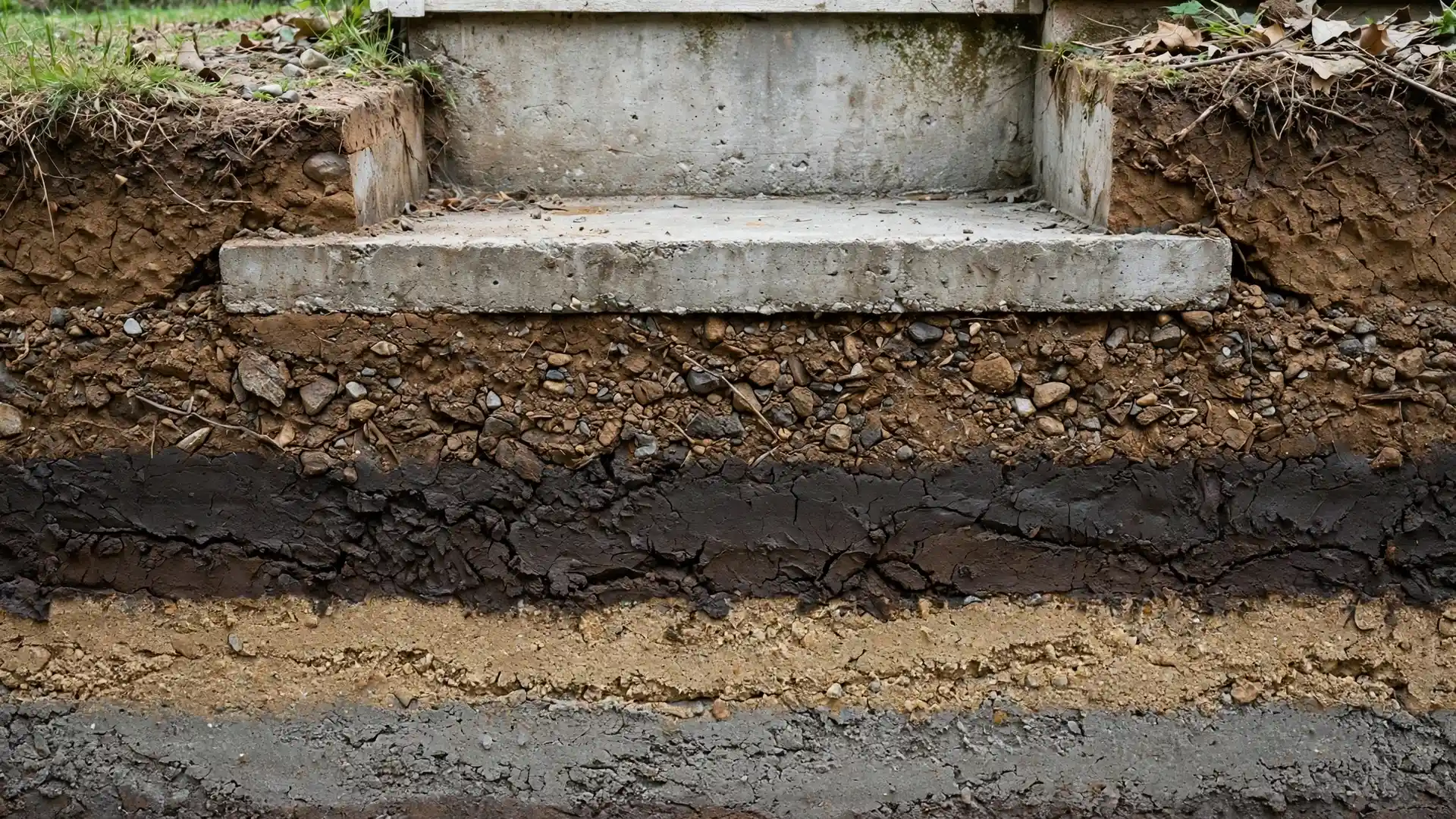
Soils contain different combinations of mineral particles, organic material, water, and air. Their physical characteristics determine how they react to moisture and structural loads.
A property may contain several soil types at different depths, making foundation behavior more complicated than surface conditions suggest.
Clay Soil and Foundation Movement
Clay contains fine particles that can retain considerable moisture. Certain clay minerals expand when wet and shrink when dry.
This behavior can create movement beneath foundations, particularly when moisture levels change unevenly around a building.
For example, soil along one side of a house may remain wet because of poor drainage while soil on the opposite side becomes dry. If expansive clay is present, those differences may contribute to uneven foundation movement.
However, not all clay soils have the same expansion potential. Their behavior depends on mineral composition, moisture conditions, and other soil characteristics.
Sandy Soil and Settlement
Sandy soil generally allows water to pass through more readily than dense clay.
Properly compacted sand can provide suitable foundation support. Loose or inadequately compacted sand, however, may compress under building loads.
In certain conditions, flowing water can also carry away fine particles, potentially creating voids and reducing support beneath concrete surfaces.
Silty Soil and Moisture Sensitivity
Silt contains particles smaller than sand but generally larger than clay.
Some silty soils can lose strength when saturated, particularly when they are loose or poorly compacted.
The degree of risk depends on soil density, moisture, groundwater conditions, and the loads placed on the soil.
Fill Soil and Construction Conditions
Fill soil is material placed or moved during construction to change the ground elevation or prepare a building site.
Properly engineered and compacted fill can provide reliable foundation support. Poorly compacted fill may compress after construction, potentially contributing to settlement.
This is why soil preparation and compaction are important considerations during foundation construction.
What Is Soil Settlement and Why Does It Happen?
Soil settlement is the downward movement of the ground caused by compression, consolidation, or rearrangement of soil particles.
Settlement can occur when the weight of a building compresses the soil beneath it. It may also develop because of changes in groundwater, inadequate compaction, or the loss of supporting material.
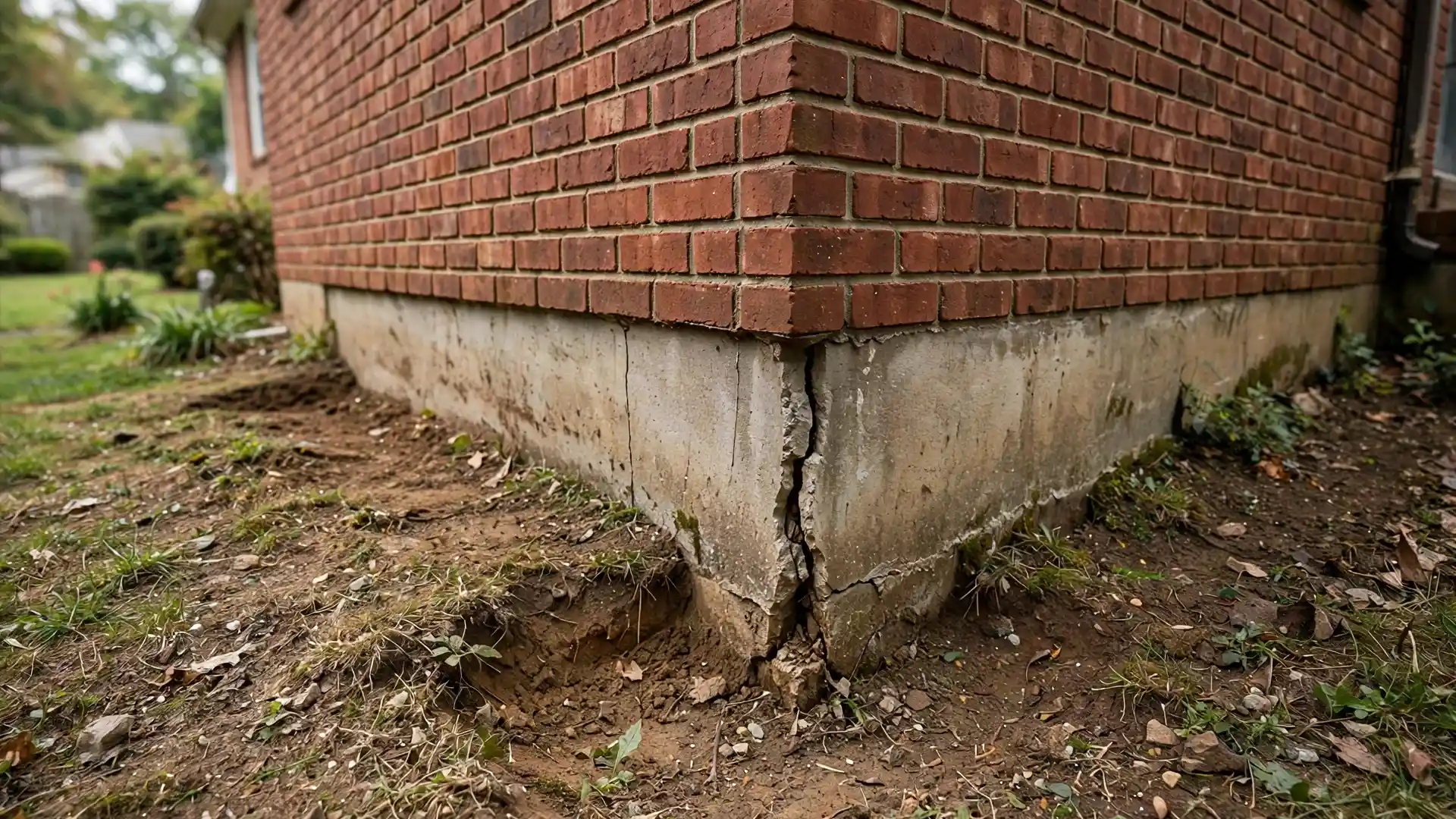
Not all settlement is harmful. Some buildings experience limited movement as the soil adjusts to structural loads.
Problems become more concerning when settlement is uneven, excessive, or continues over time.
Uniform Settlement
Uniform settlement occurs when a foundation moves downward relatively evenly.
When movement is limited and consistent across the foundation, it may create less structural stress than uneven settlement.
The building’s design and tolerance for movement still matter.
Differential Settlement
Differential settlement occurs when one part of a foundation moves more than another.
This uneven movement can place stress on structural components, potentially causing cracks, changes in floor elevation, and distortion around doors or windows.
Imagine a home where soil beneath one corner compresses while the ground supporting the rest of the foundation remains relatively stable.
The affected corner may begin to settle, creating stress where the moving and stationary sections connect.
Differential settlement is often a significant consideration during foundation evaluations because it can affect how structural loads are distributed.
Common Causes of Soil Settlement
Several conditions may contribute to settlement:
-
Inadequately compacted soil beneath the foundation
-
Compression of loose or soft soil layers
-
Changes in groundwater conditions
-
Soil erosion or loss of supporting material
-
Decomposition of buried organic material
-
Changes in building loads
-
Nearby excavation or construction activity
The cause cannot always be determined from visible damage alone.
When settlement affects structural stability, professional foundation stabilization may be considered after the condition of the foundation and underlying soil is evaluated.
How Expansive Soil Can Damage a Foundation
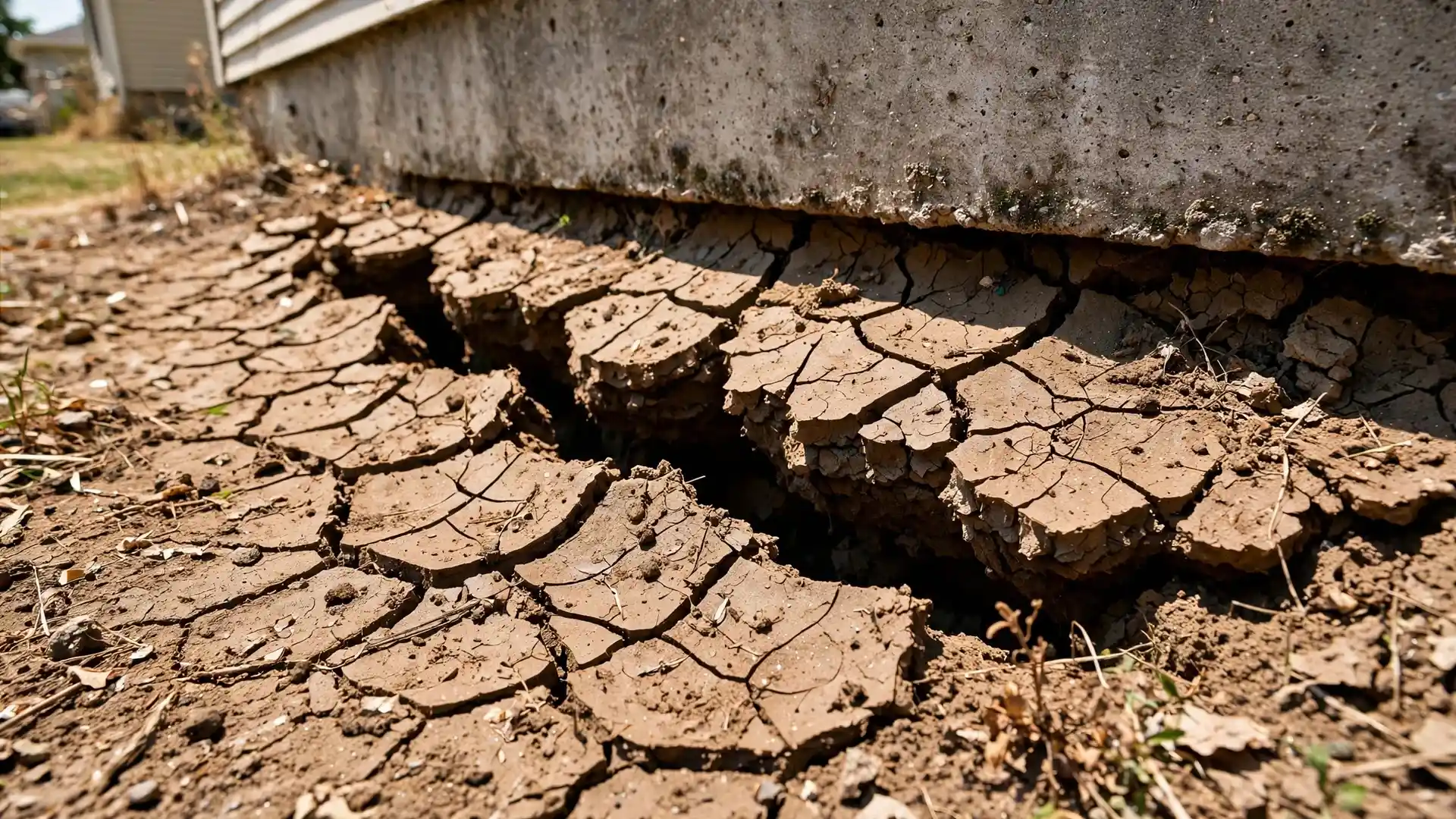
Expansive soil refers to soil that changes volume significantly as its moisture content changes.
Certain clay-rich soils absorb water and swell during wet conditions. As they dry, they may shrink and lose volume.
These repeated changes can affect the amount and distribution of support beneath a foundation.
What Happens When Expansive Soil Gets Wet?
When expansive clay absorbs moisture, it can exert upward pressure against concrete slabs and other foundation components.
This movement is known as soil heave.
If swelling occurs unevenly beneath the building, different areas of the foundation may move at different rates.
The resulting stress can contribute to cracking or structural distortion.
What Happens During Dry Weather?
As expansive soil loses moisture, it may shrink.
In some circumstances, shrinking soil can create gaps near foundation walls or reduce support beneath parts of the structure.
Extended dry periods can make these conditions more noticeable, particularly when moisture changes occur unevenly.
Can Expansive Soil Cause Seasonal Foundation Movement?
Yes. Some foundations experience changes associated with seasonal wet and dry conditions.
Homeowners may notice cracks becoming more visible during certain periods or doors behaving differently as conditions change.
However, these observations do not automatically establish that expansive soil is responsible.
Temperature changes, humidity, building materials, and other structural factors can produce similar symptoms.
Professional assessment may be needed to identify the actual cause.
How Soil Erosion Affects Foundation Support
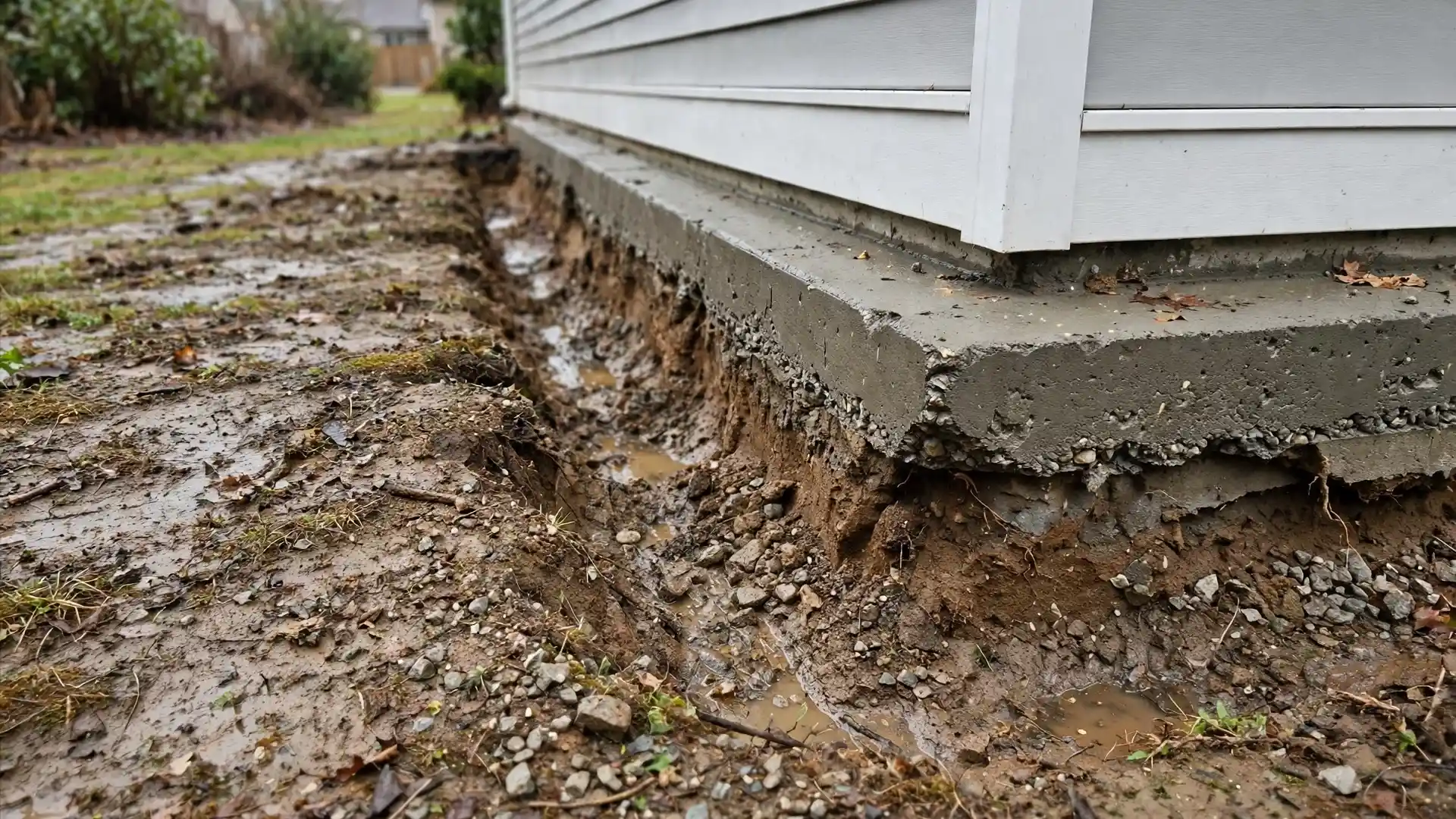
Soil erosion occurs when water or other processes remove soil particles from an area.
Around residential foundations, erosion is often associated with surface runoff, concentrated drainage, or underground water movement.
When erosion removes material that supports a foundation or concrete surface, it can create conditions for settlement or structural movement.
Surface Erosion Near Foundation Walls
Rainwater flowing across poorly graded landscaping may gradually carry soil away from the foundation.
Over time, channels or depressions may develop near the building.
Surface erosion does not always affect structural support, but exposed footings or significant loss of supporting material deserve professional attention.
Soil Washout Beneath Concrete
Water moving beneath a concrete slab may carry away fine soil particles under suitable conditions.
If enough material is removed, voids can develop.
Concrete surfaces that lose support may begin to settle, crack, or become uneven.
Depending on the condition, possible repair approaches include concrete lifting and leveling or polyurethane foam injection.
These methods are generally more suitable for certain concrete repair applications than for every type of load-bearing foundation problem.
Erosion Around Sloped Properties
Homes built on sloping ground can experience concentrated runoff and changes in soil support.
Retaining walls may also be affected by drainage conditions, erosion, and lateral soil pressure.
If a retaining wall begins to lean, crack, or show signs of movement, professional retaining wall repair may be necessary.
Identifying the source of erosion is important because repairing visible damage without addressing water movement may leave the underlying problem unresolved.
Why Drainage Issues Can Lead to Foundation Problems
Water management plays an important role in foundation stability.
Poor drainage may cause excessive moisture to collect around a building, increasing soil saturation, contributing to erosion, or affecting expansive clay.
The relationship between water and foundation movement depends on the surrounding soil and the building’s structural design.
Poor Yard Grading
The ground surrounding a home should generally direct surface water away from the foundation.
When the landscape slopes toward the building, rainwater may collect near foundation walls or enter low-lying areas.
Persistent moisture can contribute to soil-related concerns and water intrusion.
Correcting improper grading may help reduce these conditions.
Clogged Gutters and Downspouts
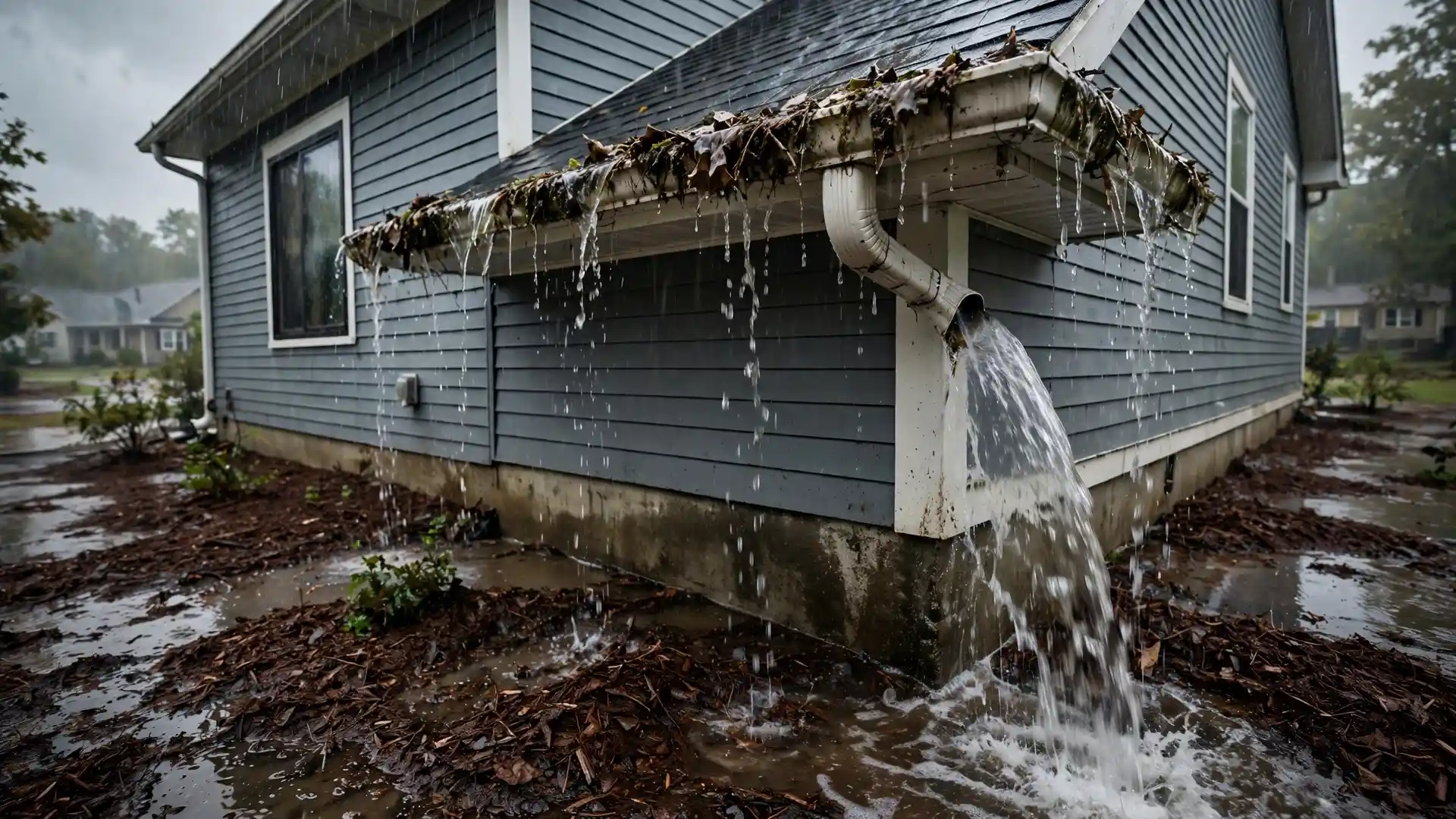
Gutters and downspouts are designed to collect roof runoff and direct it away from the building.
When gutters become clogged or downspouts discharge too close to the foundation, water may concentrate in the surrounding soil.
Regular gutter maintenance and appropriate drainage routing can help prevent avoidable water accumulation.
Underground Plumbing Leaks
Leaking water supply lines or underground drain pipes can change moisture conditions in surrounding soil.
Depending on the soil type, these changes may contribute to erosion, loss of strength, or swelling.
A plumbing leak does not necessarily cause foundation movement, but unexplained wet areas or persistent underground leaks should be investigated.
Crawl Space Moisture Problems
Moisture beneath a home can affect more than the soil.
High humidity, standing water, and repeated moisture exposure may contribute to wood deterioration, damaged insulation, and other problems affecting crawl space components.
Professional crawl space moisture control may help address moisture intrusion and related environmental conditions.
For homes with basement or garage concerns, evaluating basement and garage foundation conditions can also help identify moisture-related problems.
Warning Signs That Soil Movement May Be Affecting Your Foundation
Soil-related foundation problems are not always immediately visible.
In many cases, homeowners first notice changes inside or around the building.
These warning signs deserve attention, particularly when they appear together or continue to worsen.
Cracks in Foundation Walls
Cracks can develop when concrete or masonry experiences stress.
Soil settlement is one possible cause, but shrinkage, temperature changes, construction conditions, and other factors may also contribute.
Cracks accompanied by displacement, increasing width, or other movement symptoms should be evaluated.
Uneven or Sloping Floors
Floors that become noticeably uneven may indicate differential settlement.
However, problems with floor joists, beams, or crawl space support systems can create similar conditions.
When movement originates from deteriorated structural components, crawl space repair may be appropriate.
Sticking Doors and Windows
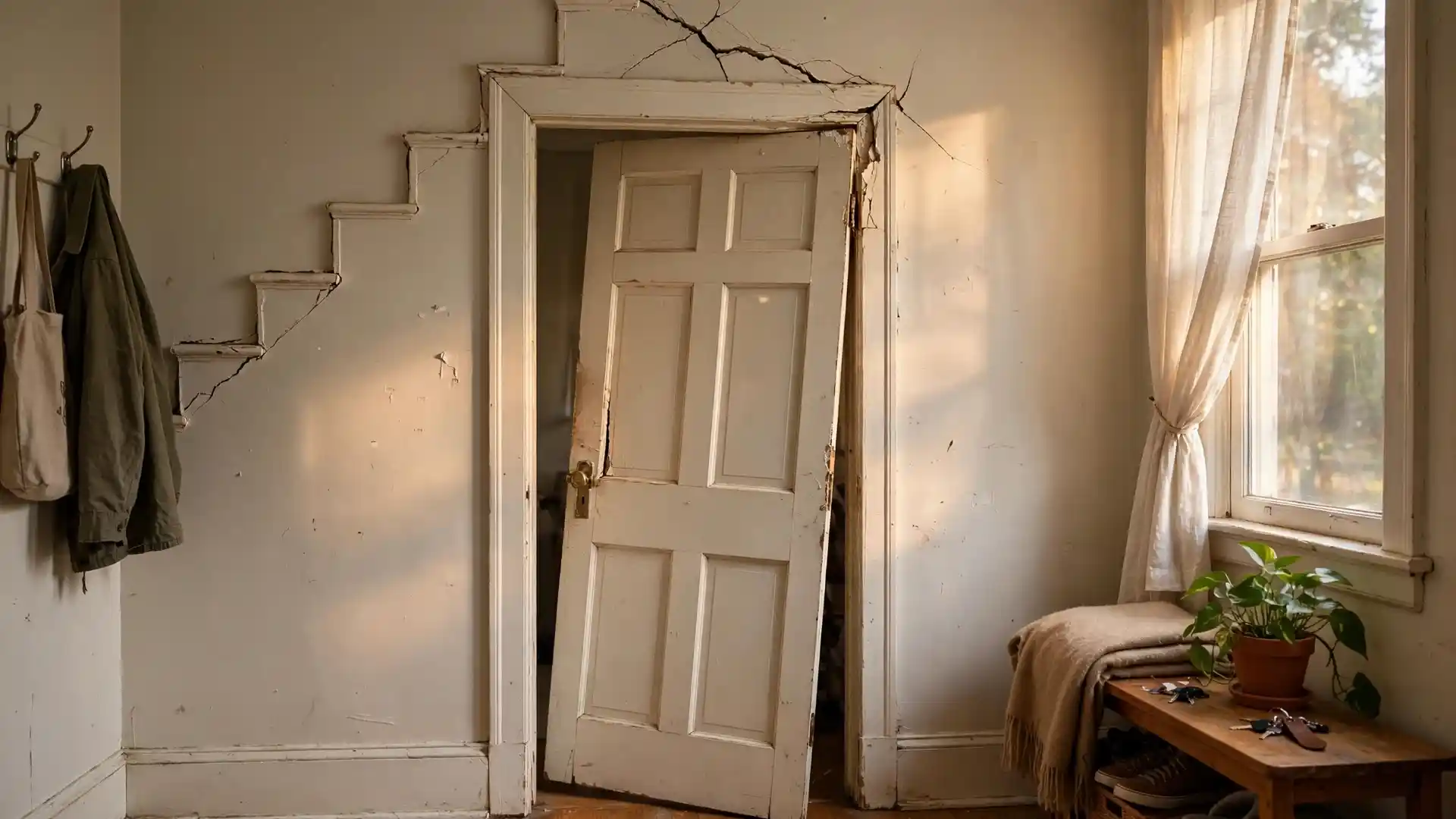
Foundation movement can change the alignment of door and window openings.
A door that previously closed normally may begin rubbing against its frame.
Humidity, hardware problems, and ordinary framing changes can cause similar symptoms, so this observation should be considered alongside other evidence.
Cracks in Concrete Slabs
Cracked or uneven concrete may develop because of soil settlement, shrinkage, loading, or other conditions.
If the slab has experienced significant displacement or lost support, concrete slab repair may be needed.
Bowing or Leaning Foundation Walls
Foundation walls can experience lateral pressure from surrounding soil.
Excessive moisture, soil pressure, and structural deficiencies may contribute to wall movement.
Where a wall shows significant bowing, cracking, or displacement, professional evaluation is important.
Depending on the findings, systems such as earth anchor systems may be considered.
Common Foundation Warning Signs
| Warning Sign | Possible Cause | Recommended Action |
|---|---|---|
| Stair-step cracks in masonry | Differential movement or masonry stress | Monitor changes and seek inspection |
| Uneven floors | Settlement or damaged floor supports | Evaluate foundation and framing |
| Sinking concrete | Soil compression or voids | Inspect the concrete support |
| Sticking doors | Structural movement or humidity | Look for related symptoms |
| Bowing foundation walls | Lateral soil pressure | Obtain professional evaluation |
| Standing water near the home | Drainage or grading issues | Investigate water management |
| Gaps around windows and trim | Building movement or material changes | Document progressive changes |
These signs do not provide a definitive diagnosis. Their significance depends on the pattern, severity, and progression of movement.
How Professionals Identify Soil-Related Foundation Problems
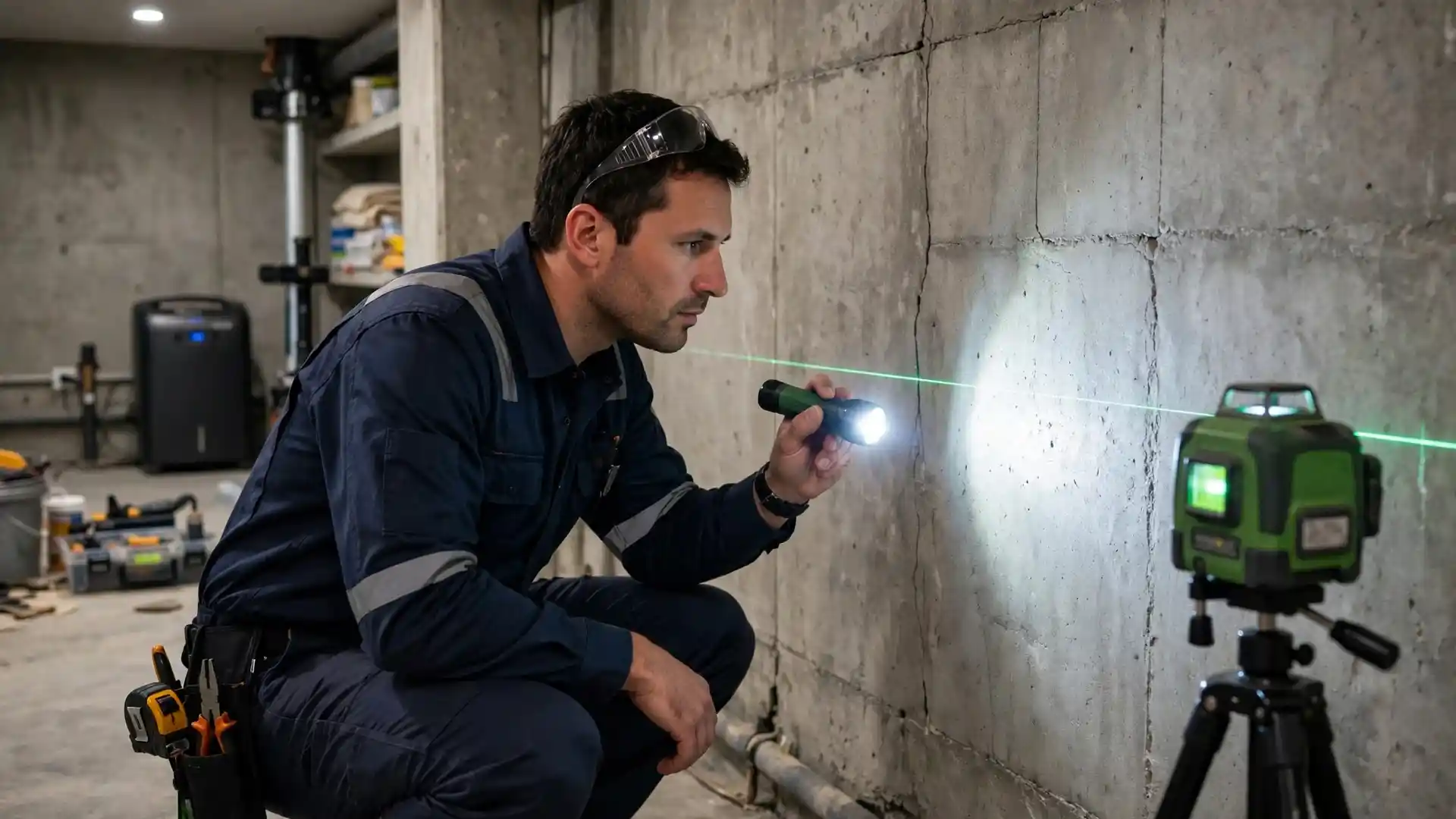
A foundation inspection helps determine whether visible symptoms may be connected to soil conditions, structural components, or other building factors.
Because several issues can produce similar symptoms, identifying the cause is essential before selecting a repair method.
Visual Inspection
A professional may examine foundation walls, slabs, floors, crawl spaces, exterior grading, and drainage conditions.
The inspection may identify cracks, displacement, moisture intrusion, deteriorated supports, or other signs of movement.
Foundation Elevation Measurements
Elevation measurements may help identify differences in floor or foundation levels.
These measurements can reveal the current shape of the structure, although a single set of readings usually cannot determine whether movement is ongoing.
Additional monitoring or historical information may be necessary.
Soil Investigation
Some situations require evaluation by a geotechnical engineer.
Subsurface exploration and soil testing may provide information about composition, compressibility, moisture conditions, and load-bearing characteristics.
Not every property needs extensive soil testing. The type of investigation depends on the severity and complexity of the problem.
Structural Assessment
If foundation movement has affected load-bearing components, a structural engineer may be needed.
The evaluation can help establish whether the building requires stabilization, additional support, or other corrective work.
Depending on the findings, professional structural repair may be recommended.
Foundation Repair Solutions for Soil-Related Problems
Foundation repair should address the actual structural condition and, where possible, the factors contributing to movement.
Different causes require different solutions.
Foundation Stabilization
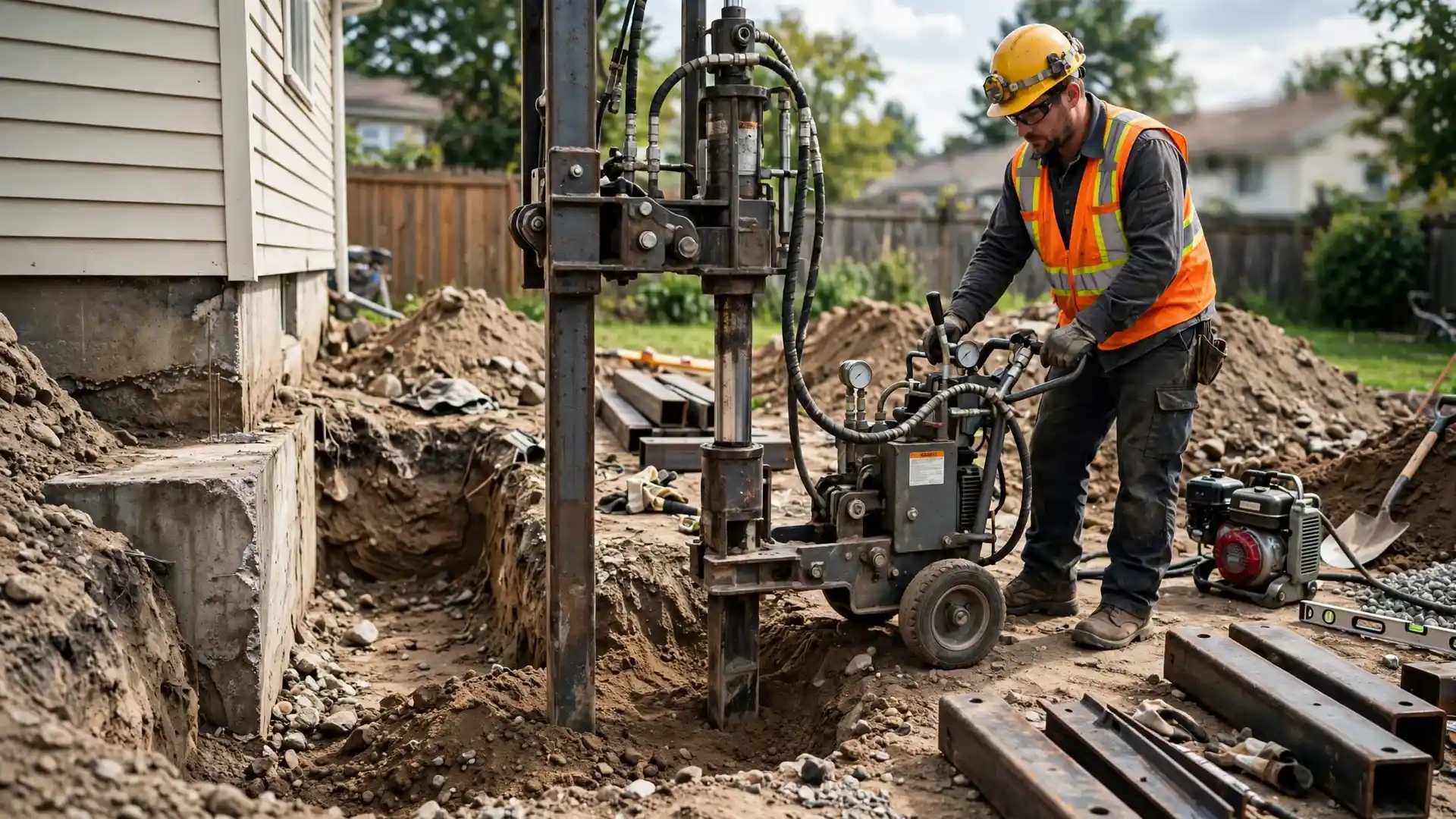
When settlement affects structural support, stabilization systems may help transfer building loads to more suitable bearing material.
The appropriate method depends on soil conditions, foundation design, building loads, and engineering requirements.
Stabilization does not always restore a foundation to its original elevation or eliminate every possibility of future movement.
Concrete Repair and Leveling
When concrete slabs or exterior surfaces settle because of localized support problems, repair methods may involve lifting, leveling, or addressing voids.
These approaches must be selected according to the concrete’s condition and structural role.
A driveway slab and a load-bearing building foundation may require substantially different solutions.
Drainage Improvements
Where excessive moisture contributes to soil problems, drainage corrections may form part of the recommended repair plan.
Potential measures include improved grading, downspout extensions, drainage systems, or plumbing repairs.
Drainage improvements can reduce certain contributing factors but may not correct existing structural damage.
Soil Improvement
In some situations, soil improvement, replacement, or compaction may be considered.
These methods are particularly relevant during construction or projects where the affected soil can be accessed.
For an existing home, the feasibility depends on structural conditions, soil characteristics, and the extent of necessary work.
Homeowners can explore available foundation repair services to better understand how different structural concerns may be addressed.
How to Help Prevent Soil-Related Foundation Problems
Not every foundation problem is preventable, but homeowners can take practical steps to reduce avoidable moisture and erosion concerns.
Keep Water Moving Away From the Foundation
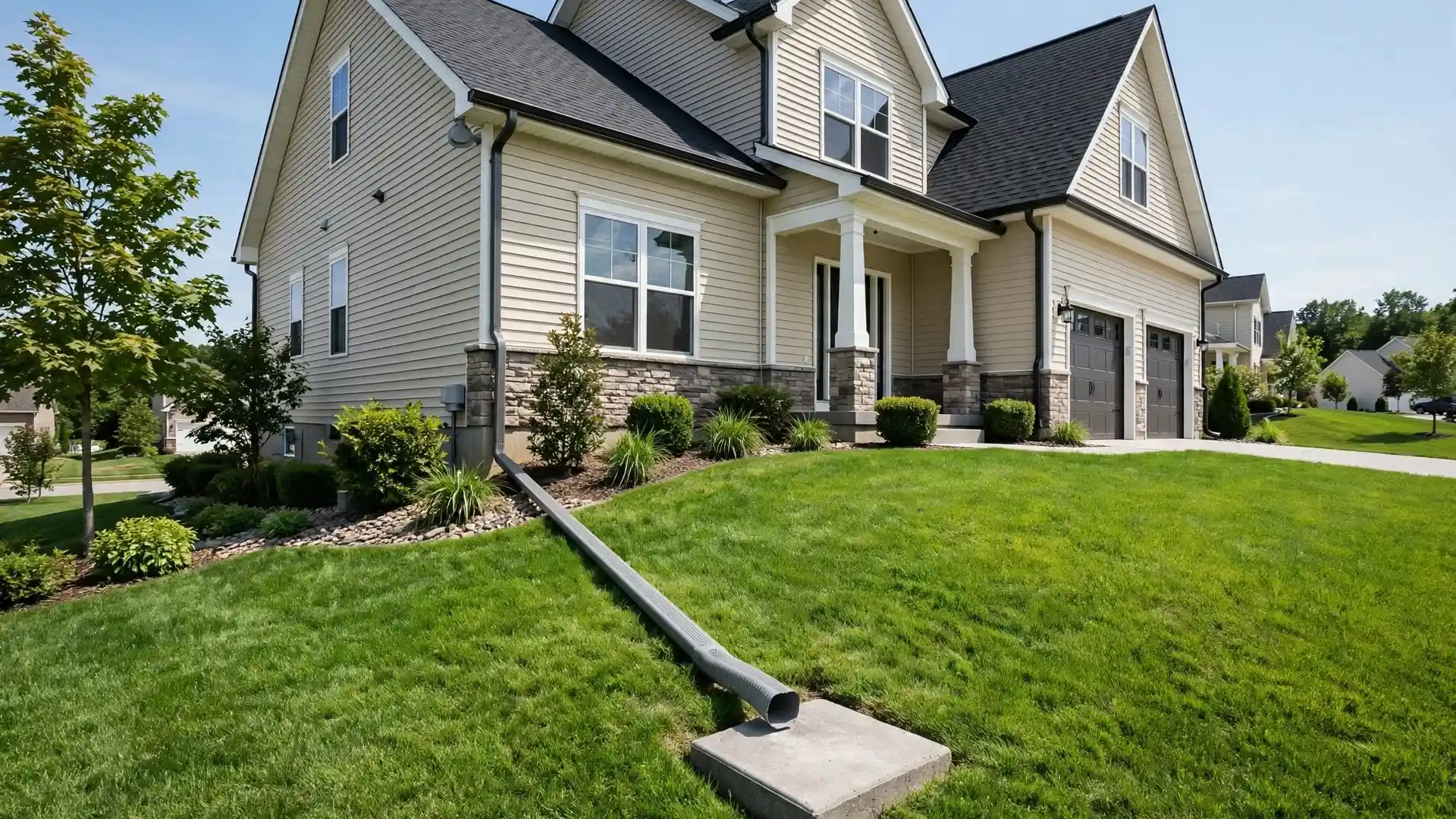
Maintain gutters and downspouts so rainwater is directed toward appropriate drainage areas.
Check whether water regularly collects beside foundation walls or in low spots near the home.
Maintain Proper Landscaping and Grading
Observe how runoff moves through the yard during rainfall.
Avoid landscape changes that direct water toward the house or create persistent pooling.
Significant grading modifications should account for existing drainage systems and nearby properties.
Repair Plumbing Leaks
Address known water supply or drainage leaks that may affect soil around the building.
Persistent moisture can alter soil conditions, even when no foundation damage is initially visible.
Watch for Erosion
Look for developing soil depressions, washed-out landscaping, exposed structural components, or voids beneath concrete surfaces.
Significant changes should be evaluated before additional material is lost.
Monitor Foundation Changes
Photograph visible cracks and record when changes occur.
If cracks grow, floors become noticeably more uneven, or other symptoms develop, arrange a professional assessment.
Cosmetic repairs should not be used as a substitute for investigating active structural movement.
Soil Conditions and Foundation Problems in North Carolina and South Carolina
Soil conditions vary throughout North Carolina and South Carolina.
Properties may contain clay-rich soil, sandy materials, weathered rock-derived soils, or areas of constructed fill.
These materials can behave differently under structural loads and changing moisture conditions.
In the Charlotte metropolitan area and surrounding communities, soil-related foundation movement is a potential concern, but no individual property should be assumed to have unstable or expansive soil without suitable evidence.
Why Neighboring Homes Can Have Different Foundation Conditions
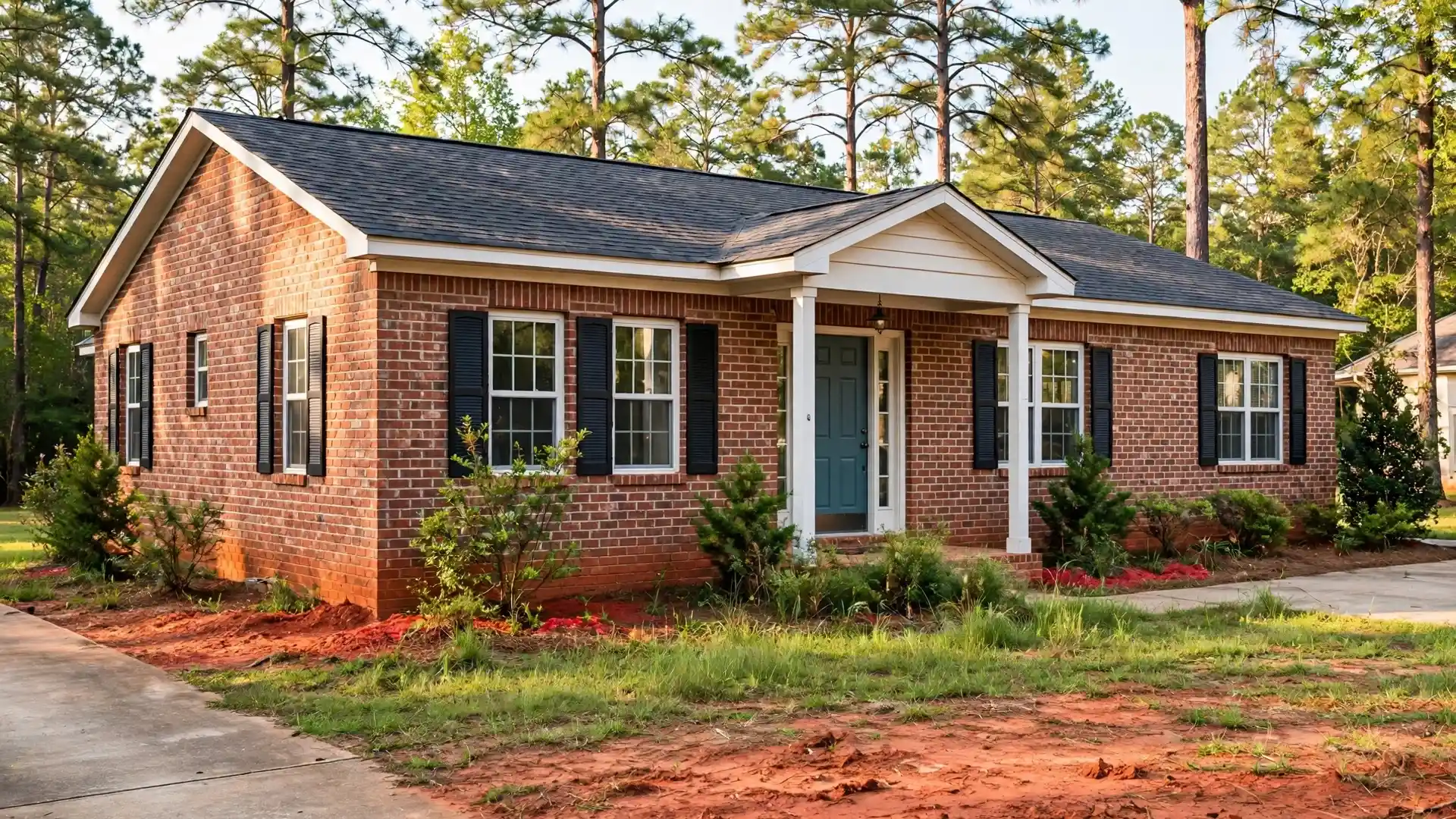
Two houses on the same street may experience different structural behavior.
One property may have well-compacted soil and effective drainage. Another may have areas of poorly compacted fill or concentrated runoff near the foundation.
Even though the homes experience similar weather, the conditions supporting their foundations may be different.
Why Local Foundation Inspections Matter
Property-specific evaluation helps distinguish soil-related movement from other potential causes of foundation damage.
Rather than assuming a crack results from expansive soil or settlement, homeowners benefit from understanding the actual structural and site conditions.
Tar Heel Foundation Solutions provides residential foundation services for homeowners seeking assistance with foundation concerns.
Homeowners can also explore the company’s service areas for location-specific information.
Frequently Asked Questions About Soil Settlement
Can soil settlement stop naturally?
Yes. Some soil settlement slows or becomes stable after the soil adjusts to structural loads. Other movement can continue because of ongoing compression, erosion, moisture changes, or inadequate support.
An inspection can help determine whether monitoring or repair is appropriate.
Does soil settlement always cause foundation damage?
No. Minor and relatively uniform settlement may occur without significant structural damage.
Uneven or excessive movement is generally more concerning because it can place additional stress on the building.
Can heavy rainfall cause foundation settlement?
Heavy rainfall can change soil moisture, contribute to erosion, or reduce the strength of certain soils.
Whether settlement occurs depends on soil characteristics, drainage, and foundation conditions.
What is the difference between soil settlement and soil heave?
Soil settlement involves downward ground movement, while soil heave involves upward movement.
Settlement may result from soil compression or loss of support. Heave can occur when expansive clay absorbs moisture and increases in volume.
Can foundation problems caused by soil be repaired?
Many soil-related foundation problems can be addressed using appropriate repair or stabilization methods.
The recommended solution depends on the underlying cause, extent of damage, and structural condition of the property.
Does improving drainage prevent foundation settlement?
Good drainage can help reduce some moisture-related risks, but it cannot prevent every type of settlement.
Soil compression, construction conditions, and other factors may still affect foundation performance.
When should I schedule a foundation inspection?
Consider an inspection if you notice widening cracks, increasing floor slopes, significant wall movement, persistent water intrusion, or other progressive structural changes.
Sudden or severe movement warrants prompt professional assessment.
Protect Your Foundation by Understanding the Soil Beneath It
Soil settlement, expansive clay, erosion, and drainage issues can all influence foundation stability. However, their effects vary depending on the property’s soil composition, moisture conditions, construction methods, and foundation design.
Recognizing warning signs and addressing drainage problems can help homeowners make informed decisions about their property.
When foundation movement becomes noticeable, identifying the underlying cause is more valuable than relying on temporary cosmetic repairs.
A professional inspection can help determine whether the situation requires monitoring, drainage improvements, structural support, or another corrective approach.
Schedule a Foundation Inspection With Tar Heel Foundation Solutions
Have you noticed foundation cracks, uneven floors, recurring drainage problems, or possible soil settlement around your home?
Tar Heel Foundation Solutions can help you take the next step in evaluating your foundation concerns and understanding potential repair options.