

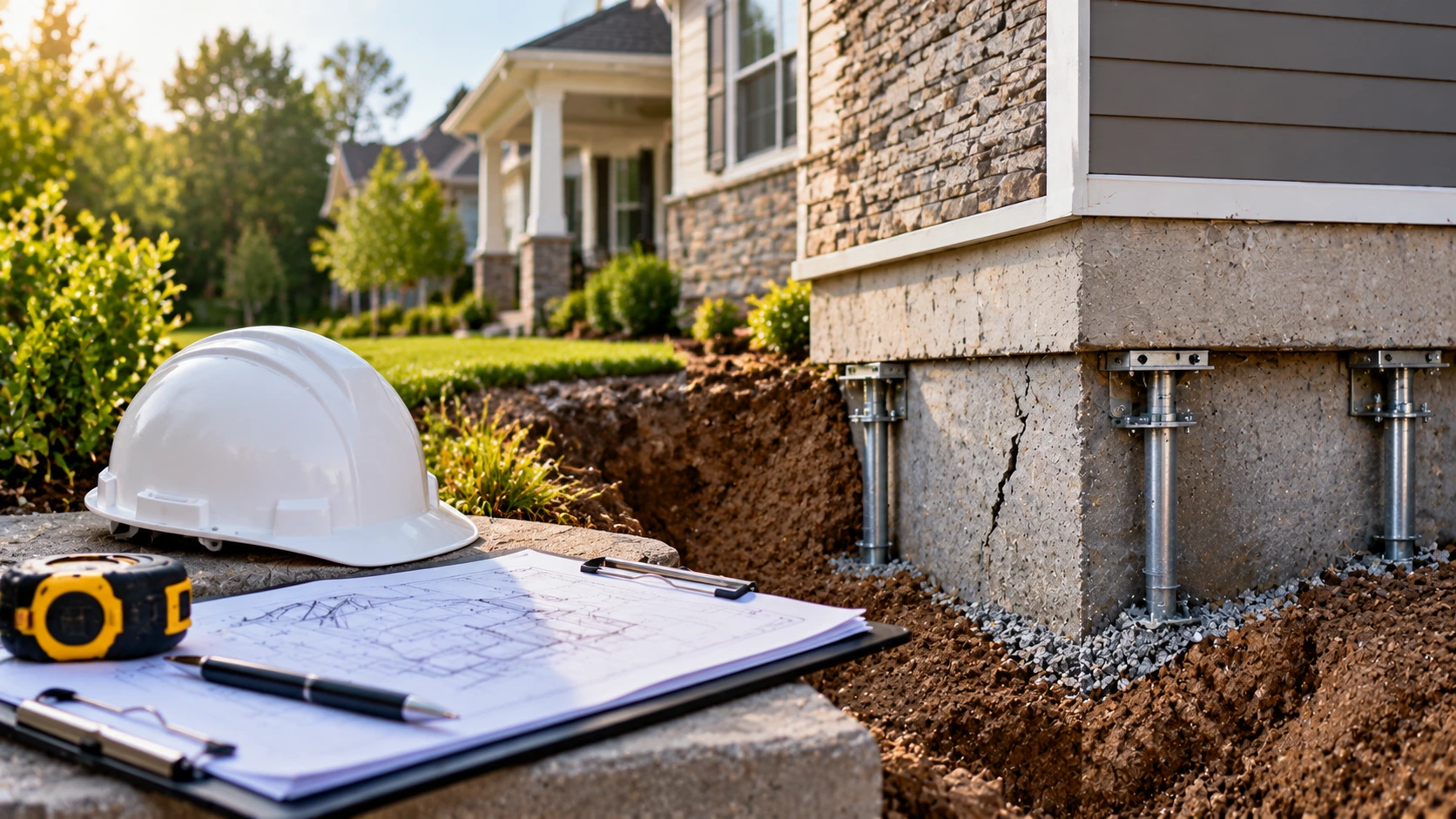
If your floors have started to slope, a door won’t latch the way it used to, or you’ve noticed a crack creeping across a basement wall, the first question most homeowners ask is simple: what is this going to cost?
Short answer: Most foundation repairs in the United States fall between roughly $2,200 and $8,400, with the typical project landing near $5,000. Minor crack sealing can run as low as $250, while major structural work involving piers, underpinning, or wall stabilization can climb past $15,000 and, in severe cases, well beyond that. The exact number depends on what’s actually wrong, how the repair is done, and where your home sits.
That range is wide because “foundation repair” covers everything from a $300 crack injection to a full underpinning project with a dozen steel piers. The rest of this guide breaks down where your project is likely to land and why.
What Drives Foundation Repair Costs Up or Down
No two foundation problems are identical, which is why two neighbors on the same street can receive very different quotes. A foundation repair estimate typically reflects a combination of the following.
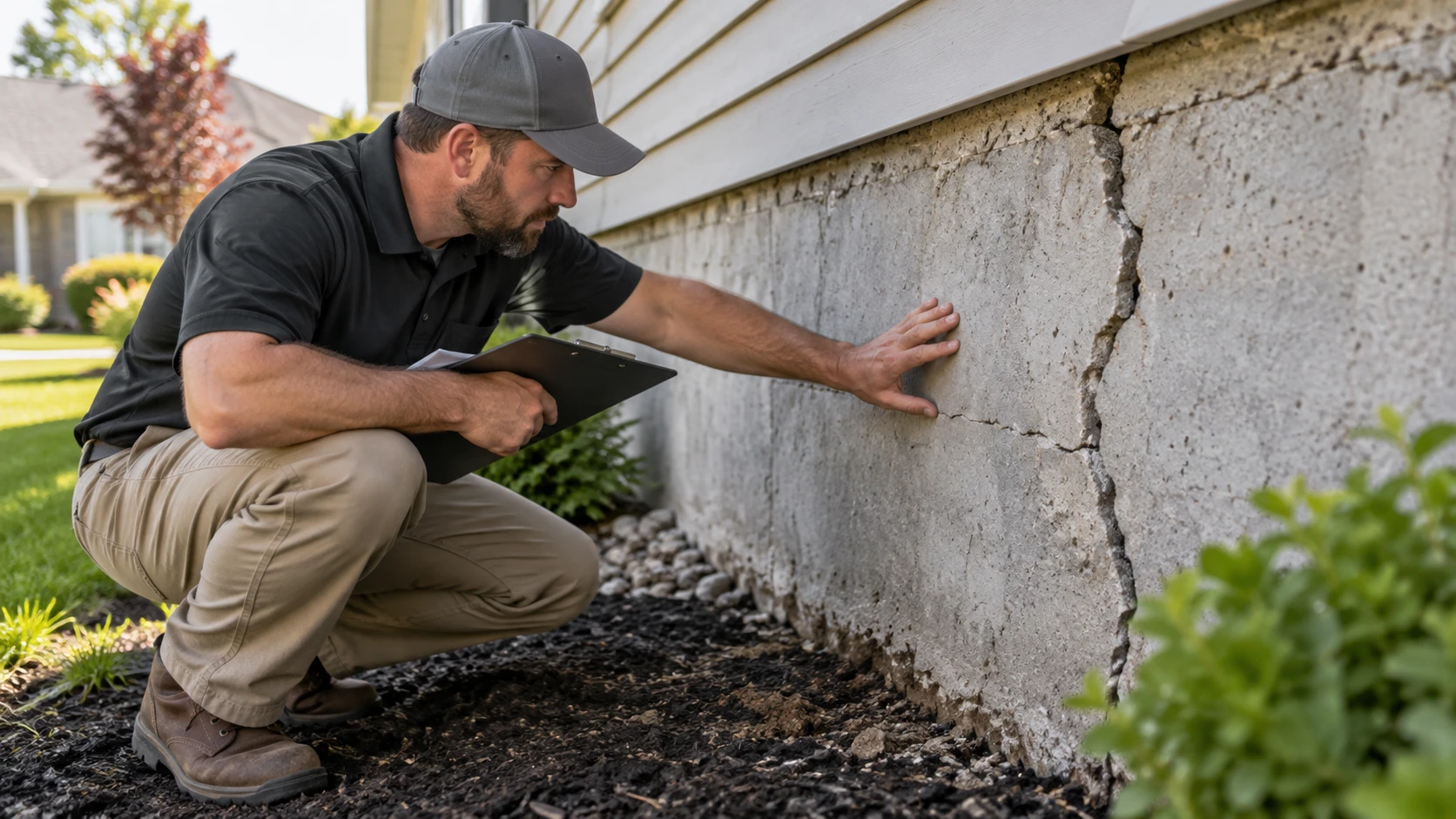
The Type and Severity of the Damage
A hairline crack in a slab is a different job than a wall that has started to bow inward under soil pressure. Cosmetic issues are inexpensive to correct. Structural movement, where the foundation itself is shifting, settling, or losing load-bearing capacity, requires engineered solutions like piers or wall anchors, and the price reflects that added complexity.
Soil and Site Conditions
Expansive clay soil, poor drainage, and grading problems around a home tend to produce more foundation movement over time, and repairs in those conditions are often more involved. Access also matters. A crawl space with limited clearance or a foundation surrounded by landscaping, decking, or a driveway can add labor time that shows up in the final number.
Repair Method
Some methods are inherently more expensive because they require heavier equipment, deeper excavation, or more material. A single push pier might run $1,200 to $3,000 installed, and a typical settlement repair often needs six or more of them, which is why full underpinning jobs frequently land in the $9,000 to $25,000 range rather than in the hundreds.
Home Size and Foundation Type
Larger homes generally have larger, heavier foundations, which means more piers, more injection points, or more linear feet of wall to stabilize. A small crawl space repair and a full basement underpinning project are not priced on the same scale.
Average Foundation Repair Costs at a Glance
The table below reflects the kind of pricing pattern seen across national cost data for residential foundation work. Actual pricing on any individual home depends on an in-person assessment, so treat this as a planning reference rather than a quote.
| Repair Severity | Typical Cost Range | Common Examples |
|---|---|---|
| Minor / cosmetic | $250 – $800 | Sealing hairline cracks, minor patching |
| Moderate | $1,000 – $12,000 | Single-area pier support, leak repair, wall bracing |
| Major structural | $15,000 – $30,000+ | Multi-pier underpinning, full wall stabilization |
| Full-scale rebuild | $30,000+ | Extensive foundation replacement (uncommon) |
Most residential jobs never reach the top end of this table. The majority of homeowners dealing with settlement, minor cracking, or an uneven floor end up somewhere in the moderate range once an inspection identifies the actual cause.
What a Foundation Inspection Usually Costs
Before any repair number means anything, someone has to determine what’s actually happening underneath the home. A structural evaluation or inspection generally costs somewhere between $300 and $1,500, depending on the size of the property and whether a full written engineering report is required.
This step is easy to skip when a homeowner is trying to save money upfront, but it’s often the difference between fixing the real problem once and paying to fix the wrong thing twice. An inspection tells a contractor whether you’re dealing with soil settlement, hydrostatic pressure, a plumbing leak beneath the slab, or something else entirely, and that diagnosis is what the rest of the estimate is built on.
How Cost Differs by Foundation Type
Not every home sits on the same kind of foundation, and the repair approach (along with the price) changes depending on what’s underneath the house.
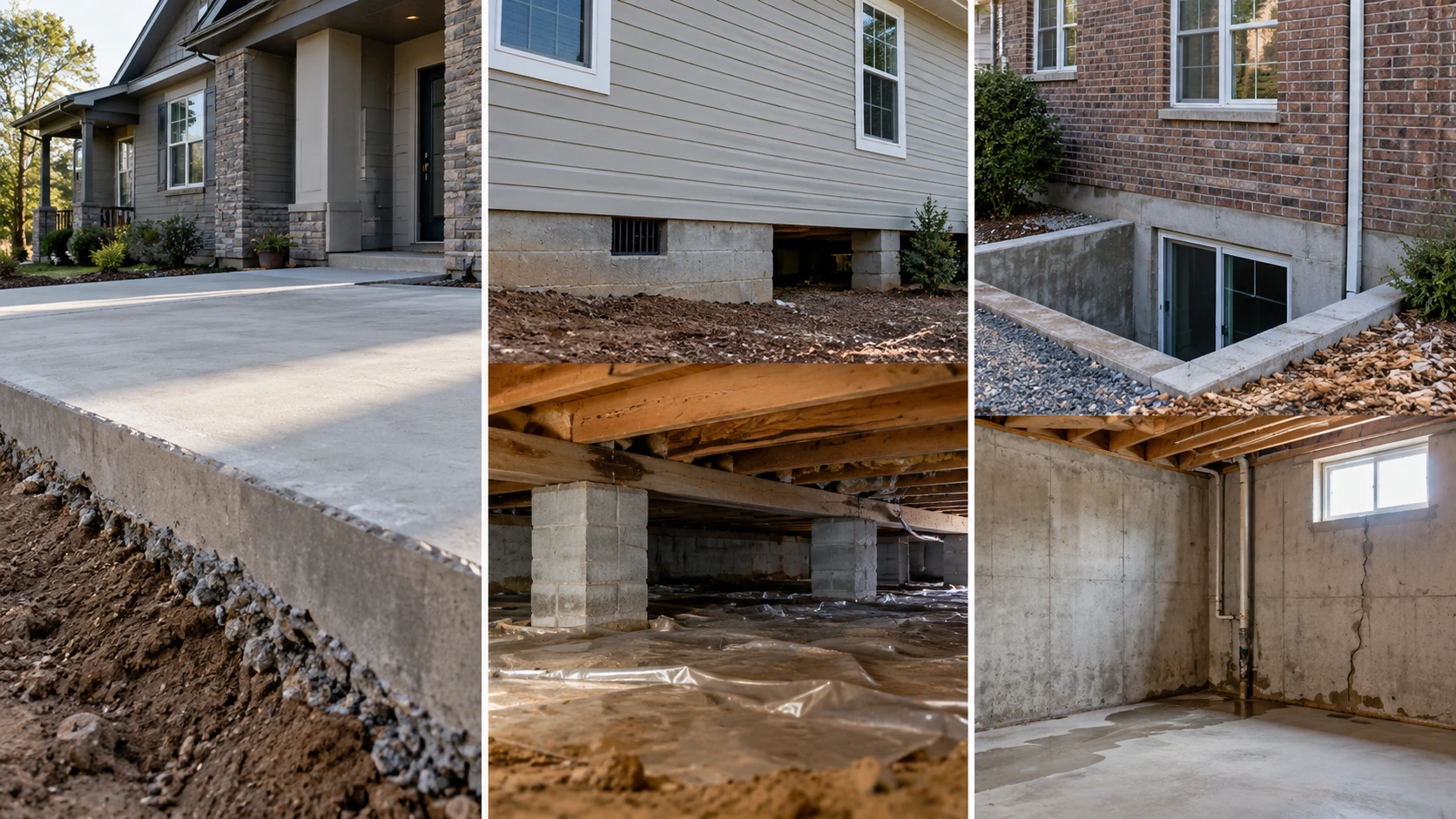
Slab Foundations
Concrete slab issues usually involve either surface cracking or the slab settling unevenly. Repairs range from a few hundred dollars for crack injection to several thousand for slab lifting or leveling, depending on how much of the slab has shifted. Concrete Slab Repair and Concrete Lifting and Leveling are the two most common paths, and pricing depends heavily on square footage and the degree of settlement.
Crawl Space Foundations
Crawl spaces introduce moisture as a major cost factor in addition to structural support. Crawl Space Repair for sagging beams or support posts is often less expensive than basement work, but if humidity and water intrusion are also present, Crawl Space Moisture Control adds to the total. Skipping the moisture piece to save money is one of the more common reasons homeowners end up paying for the same crawl space twice.
Basement Foundations
Basements carry the highest average repair costs because the walls themselves can bow, crack, or lean under soil pressure, and correcting that usually means wall anchors, carbon fiber strips, or Earth Anchor Systems rather than a simple patch. Basement and Garage work also tends to involve more excavation, which adds labor cost.
Residential vs. Commercial Repair Costs
Commercial foundation problems are priced on a different scale than residential ones, mainly because of building size, load requirements, and access logistics. A single-family home might need six to eight piers; a commercial building with heavier structural loads or a larger footprint can require significantly more, and the equipment involved is often larger as well.
Commercial Foundation Repair projects also tend to involve additional planning around business operations, since many repairs need to happen without shutting down a facility entirely. For larger commercial structures, Deep Foundation Support Systems or Commercial Shoring and Structural work is priced individually based on engineering requirements rather than a standard per-project range, since commercial buildings vary so widely in size and use.
Costs Homeowners Often Don’t Expect
A few expenses tend to catch people off guard because they show up outside the core repair line item.
- Permits. Larger structural repairs often require a permit, which can add $75 to $150 or more depending on the municipality.
- Drainage corrections. If poor grading or gutter drainage contributed to the problem, addressing that separately can prevent the repair from failing again.
- Cosmetic restoration. Repairing drywall, flooring, or landscaping disturbed during the repair is sometimes a separate cost from the structural work itself.
- Follow-up monitoring. Some contractors include a monitoring period after major repairs; others charge separately for a return visit to confirm the fix is holding.
None of these are guaranteed to apply to every project, but they’re worth asking about before signing off on an estimate so there are no surprises partway through.
How Contractors Actually Build an Estimate
A trustworthy estimate isn’t a flat number pulled from a price sheet. It usually starts with a site visit, where a technician or engineer looks at crack patterns, checks door and window alignment, measures floor level, and sometimes examines soil conditions around the foundation. From there, the estimate reflects the specific repair method recommended, the number of piers or injection points needed, site access, and any supporting work like drainage or moisture control.
This is also why phone quotes for foundation work are rarely accurate. Two homes with the same symptom, a cracked wall, can have completely different underlying causes, and the fix (and the price) changes accordingly.
Ways to Keep Costs Manageable
There isn’t a way to guarantee a low price on foundation work, since every home is different, but a few habits consistently help homeowners avoid the highest end of the range.
- Address small issues early. A crack that costs a few hundred dollars to seal today can turn into a multi-pier repair later if water keeps finding its way in.
- Get more than one assessment. Repair methods and recommendations can vary between contractors, and a second opinion sometimes reveals a less invasive (and less expensive) option.
- Ask what’s included. Confirm whether the quote covers permits, drainage work, and cosmetic repair, or whether those are billed separately.
- Fix drainage alongside structural work. If water management around the foundation isn’t corrected, there’s a real chance the same problem returns.
Red Flags to Watch for in a Repair Estimate
Not every low quote is a good deal, and not every high quote reflects better work. A few things worth questioning: an estimate given without any physical inspection, a contractor who can’t explain why a specific repair method was chosen, or pricing that seems to assume the worst-case repair before any diagnosis has happened. On the other end, be cautious of anyone promising a permanent, guaranteed fix regardless of future soil movement or weather conditions. Foundation repair can meaningfully improve stability and address the current problem, but no reputable contractor can promise that soil, water, or settling will never affect a structure again.
Getting an Accurate Number for Your Home
Every range in this guide is a starting point, not a substitute for someone actually looking at your foundation. The only way to know what your specific repair will cost is a site visit and inspection, since the type of damage, your foundation type, and your local soil conditions all factor into the final number.
If you’re seeing cracks, sloping floors, sticking doors, or a wall that doesn’t look quite straight anymore, the next reasonable step is getting eyes on it before the problem grows. Get a Free Estimate and find out exactly what your repair would involve, with no pressure to move forward until you have real numbers in hand.