

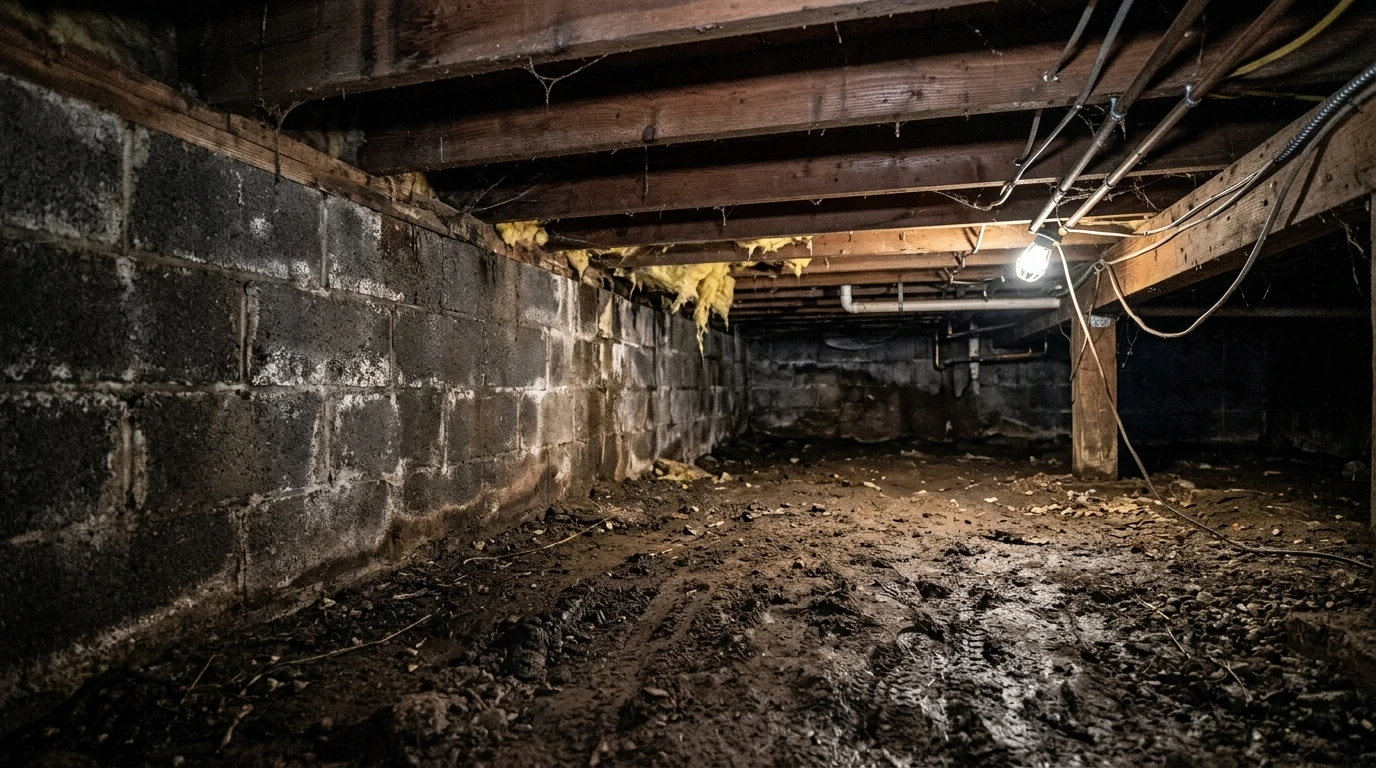
Crawl space moisture can cause much more than a damp smell under your home. When water or high humidity remains in a crawl space, it can affect insulation, floor joists, beams, subflooring, support systems, and the soil surrounding the foundation.
That does not mean every damp crawl space has a failing foundation. The amount of moisture, where it comes from, how long it remains, and which materials are affected all matter.
A small plumbing leak creates a different problem from groundwater entering after every heavy rain. High summer humidity creates different conditions from poor exterior drainage. Finding that difference is the first step toward choosing the right repair.
The U.S. Environmental Protection Agency notes that high crawl space humidity can contribute to hidden mold growth, particularly over bare soil, and that moisture can move from crawl spaces into other parts of a building. Building America guidance also recommends resolving drainage and active water problems before sealing and insulating a crawl space.
Understanding how moisture moves through the area beneath your home makes it much easier to recognize which problems can wait, which need moisture control, and which may require structural attention.
Can Crawl Space Moisture Really Damage a Foundation?
Yes, persistent crawl space moisture can contribute to conditions that damage parts of the foundation and the structural system above it. The damage does not always happen in the way homeowners expect.
Concrete foundation walls do not rot because a crawl space is humid. Wood floor joists can.
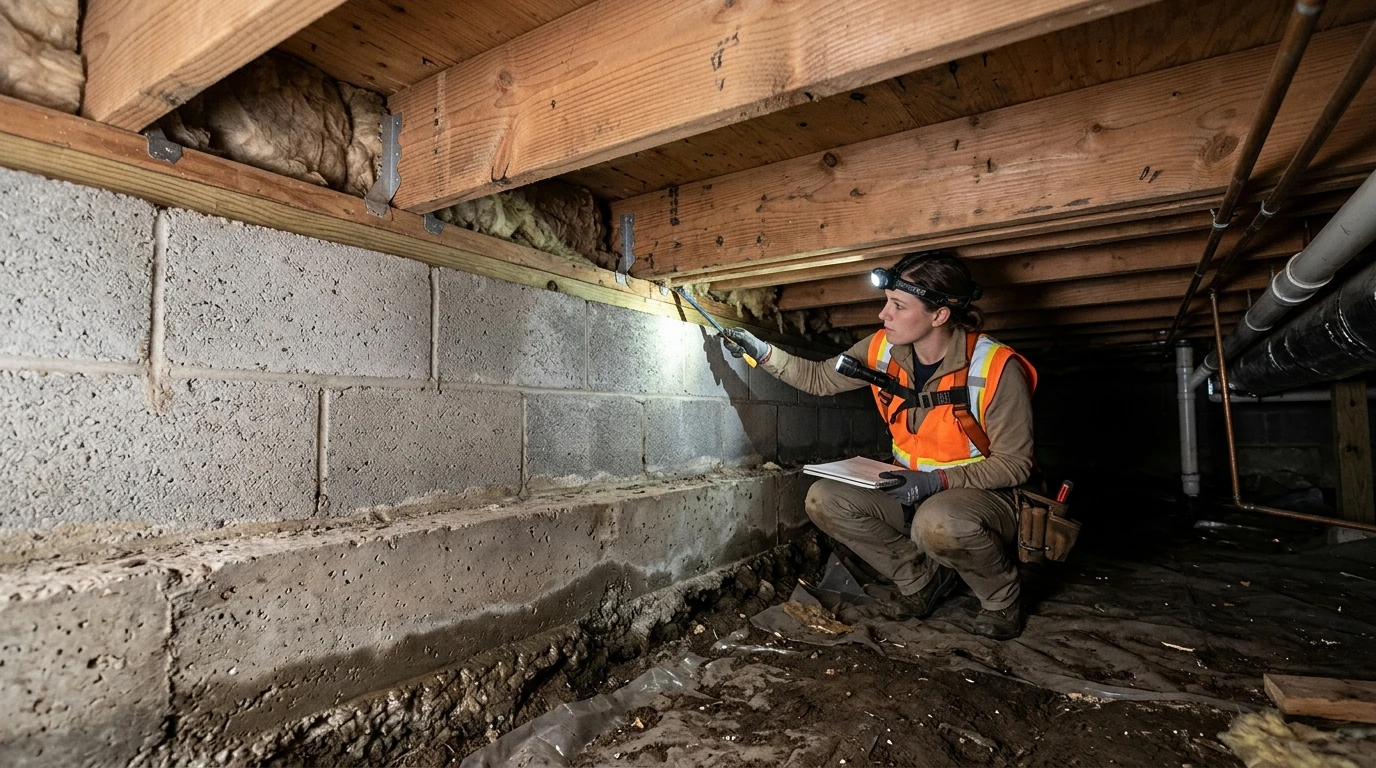
A little condensation does not automatically make a house settle. Saturated or repeatedly changing soil conditions around supports can be more significant.
This distinction matters because a crawl space includes several systems working together:
- Foundation walls and footings
- Interior piers, posts, and supports
- Beams and floor joists
- Subflooring
- Plumbing and HVAC components
- Insulation
- Soil beneath and around the home
Moisture may affect one system first and another later.
For example, persistent humidity can keep wooden framing damp enough for fungal growth and decay to become possible. If joists or beams lose strength, floors above may begin to feel soft, uneven, or bouncy even though the concrete perimeter foundation itself has not failed.
In another home, the framing might remain sound while poor exterior drainage repeatedly saturates soil along the foundation. Soil movement or pressure can then become the larger structural concern.
EPA guidance explains that prolonged moisture and mold problems can eventually damage building materials and structural components.
Homeowners who are already seeing structural symptoms can review Tar Heel Foundation Solutions’ foundation repair services to better understand how foundation movement is evaluated separately from moisture alone.
The Five Main Ways Moisture Gets Under a Home
Finding water in a crawl space tells you where the water ended up. It does not necessarily tell you where the problem started.
Most crawl space moisture can be traced to a few broad pathways.
Rainwater and poor exterior drainage
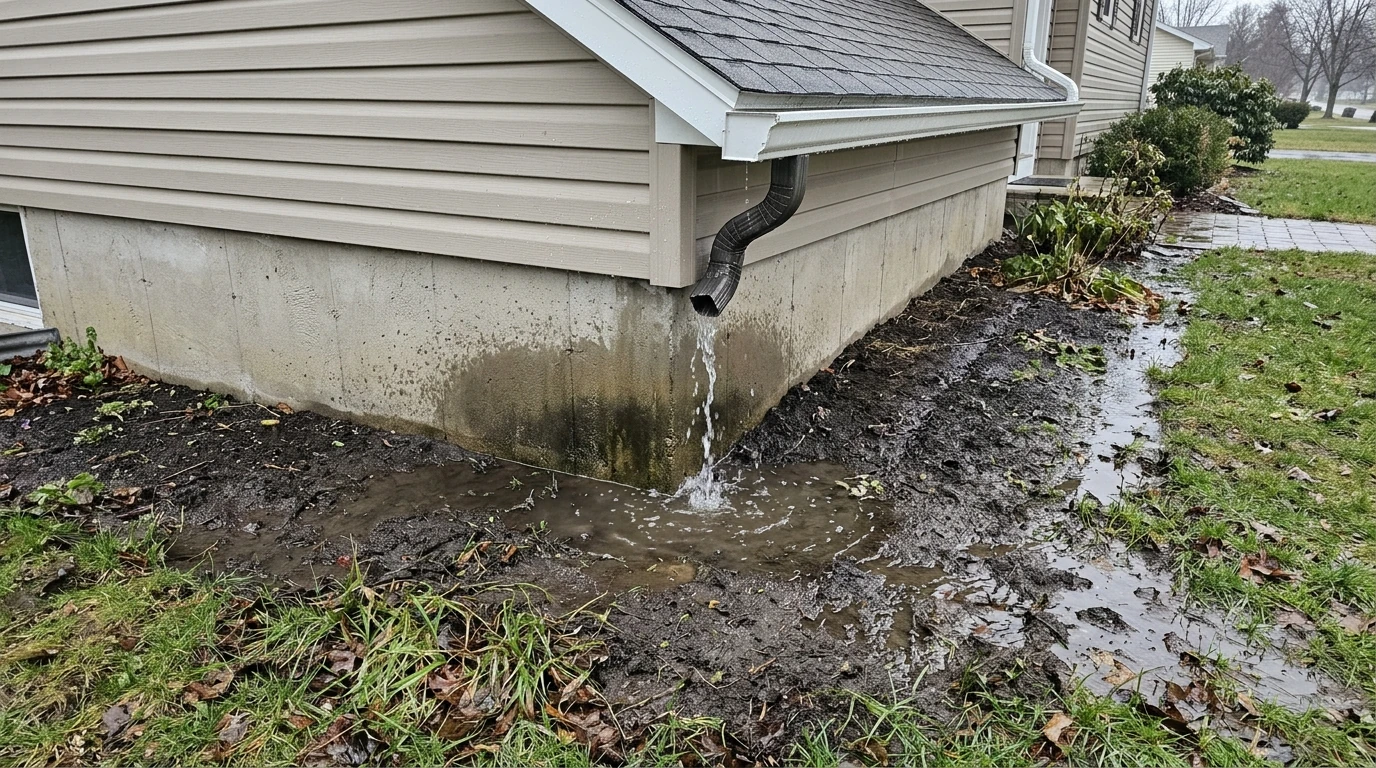
Water falling from the roof should move through gutters and downspouts and discharge away from the foundation.
Problems begin when gutters overflow, downspouts release water beside the house, or the surrounding ground slopes toward the foundation.
During repeated rainfall, the soil beside the crawl space can become saturated. Water may then enter through openings, joints, porous masonry, low areas, or around the footing.
Building America guidance places exterior water management near the beginning of the repair process. Grading, gutters, downspouts, and perimeter drainage should be evaluated before simply sealing the crawl space.
Groundwater
A high or temporarily rising water table can introduce moisture from below.
A homeowner might notice that the crawl space becomes wet only after extended periods of rain rather than after every short storm. Water may appear near low points or seem to rise through exposed soil.
Groundwater problems may require drainage and water removal systems rather than humidity control alone.
Moisture evaporating from exposed soil
A crawl space does not need visible standing water to become humid.
Bare earth contains moisture. As that moisture evaporates, water vapor enters the crawl space air.
EPA specifically identifies exposed soil as an important source of crawl space humidity.
A properly designed ground vapor barrier helps reduce this pathway. Tar Heel Foundation Solutions’ crawl space moisture control services address moisture problems where controlling water and humidity beneath the home is the main concern.
Plumbing or mechanical leaks
Supply lines, drain lines, HVAC equipment, and condensate drains commonly pass through crawl spaces.
A slow leak can keep one area continuously wet even during dry weather.
This is why the timing of the problem can provide useful clues. Water that appears after storms suggests something different from a wet area that stays active through a long dry period.
Humid outdoor air and condensation
Sometimes the water enters as vapor rather than liquid.
Warm, humid air entering a cooler crawl space can reach surfaces cold enough for condensation to form. Ducts, pipes, framing, and subfloor surfaces may then become visibly wet even though no pipe has broken and no groundwater is entering.
This is especially relevant in humid climates.
Why Humidity Can Be a Problem Even Without Standing Water
Many homeowners expect a moisture problem to look like puddles.
It often does not.
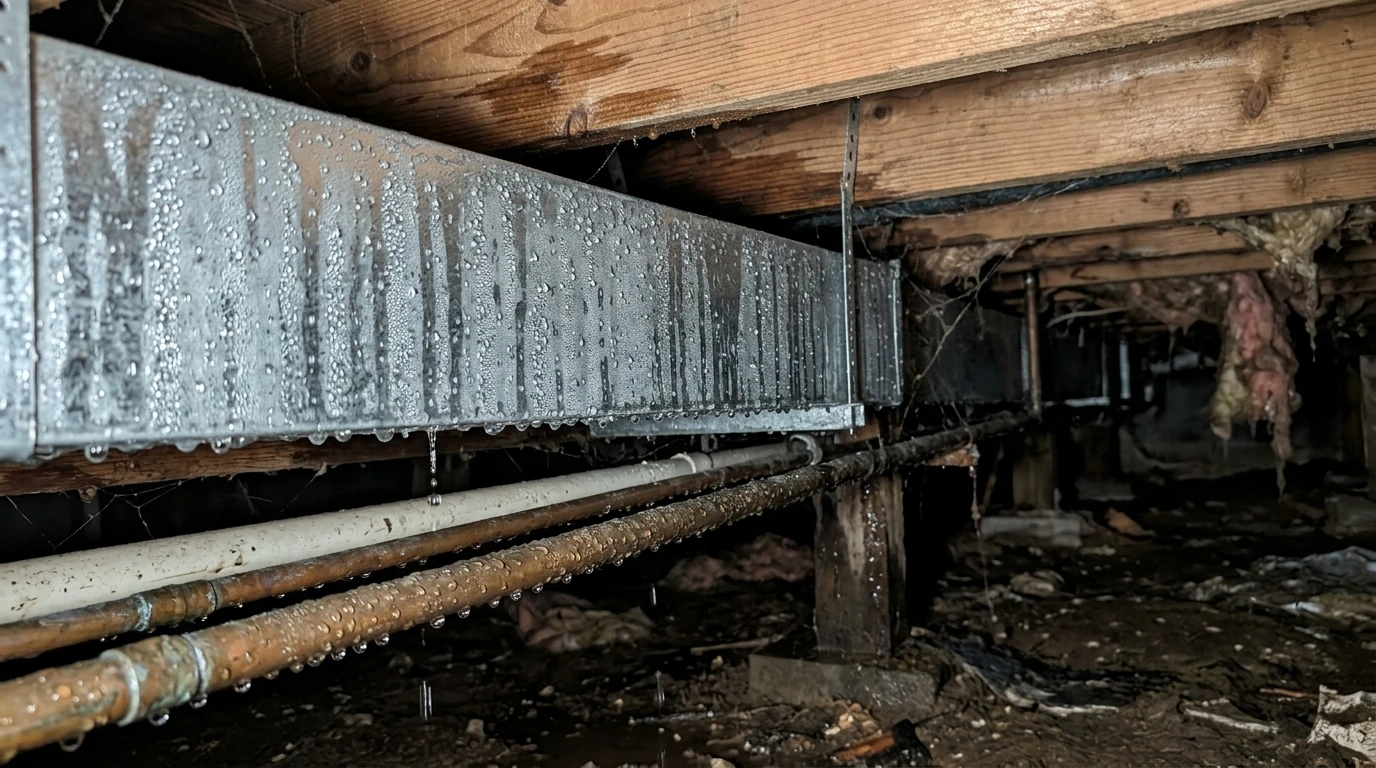
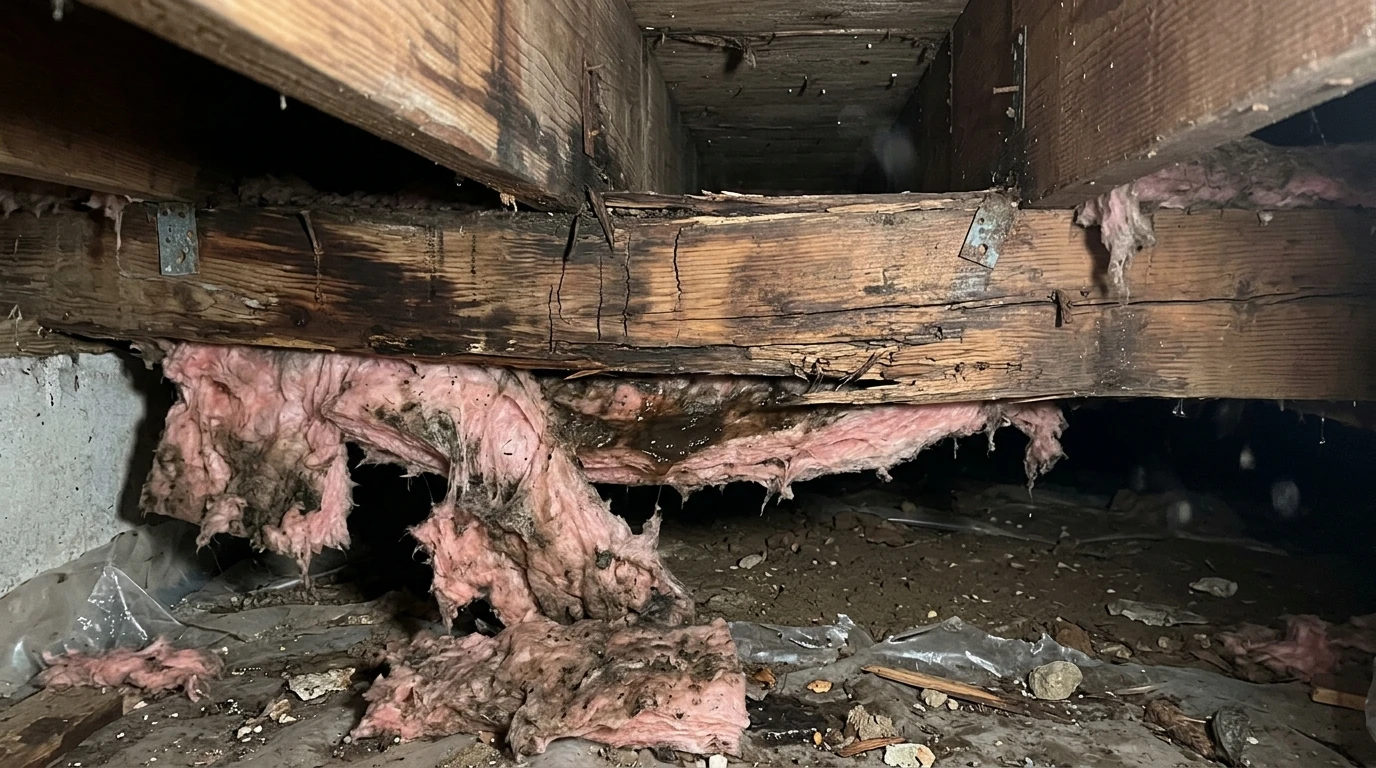
A crawl space may appear relatively dry at ground level while the wood overhead remains exposed to elevated humidity for long periods. Condensation may form on ducts or pipes. Fiberglass insulation may absorb moisture, become heavy, and begin sagging.
The EPA recommends keeping indoor relative humidity below 60 percent and ideally between 30 and 50 percent when possible. NC State Extension provides similar guidance in its mold and moisture checklist and specifically recommends checking crawl spaces for moisture and adequate ground vapor protection.
Humidity readings should still be interpreted alongside temperature, wood moisture, weather, and visible conditions. A single measurement does not diagnose a crawl space.
Can opening the vents dry the crawl space?
Not necessarily.
The old assumption was that outdoor airflow would carry crawl space moisture away. In humid weather, the opposite can happen.
Warm outdoor air can enter through vents and contact cooler surfaces beneath the home. When the surface temperature is low enough, moisture condenses.
Department of Energy research on conditioned crawl spaces has found that traditional ventilation can create moisture problems in humid climates because the outside air itself carries substantial moisture.
That is why simply opening more vents is not a universal moisture solution.
What Persistent Moisture Does to Wood, Insulation, and Floor Supports
The most immediate structural concern in many wet crawl spaces is not the concrete foundation. It is the wooden structure resting above it.
Floor joists, beams, rim boards, and subflooring are organic materials. When they remain damp, conditions become more favorable for fungal growth and eventual decay.
EPA guidance explains that prolonged mold and moisture problems can gradually weaken building materials.
Wood can lose strength
Wood decay is a process, not something that happens the moment humidity rises.
That is why duration matters.
A brief increase in humidity after unusual weather is different from framing that remains damp month after month because groundwater, drainage, or condensation was never addressed.
As deterioration progresses, a homeowner may eventually notice:
- Soft or deteriorated wood
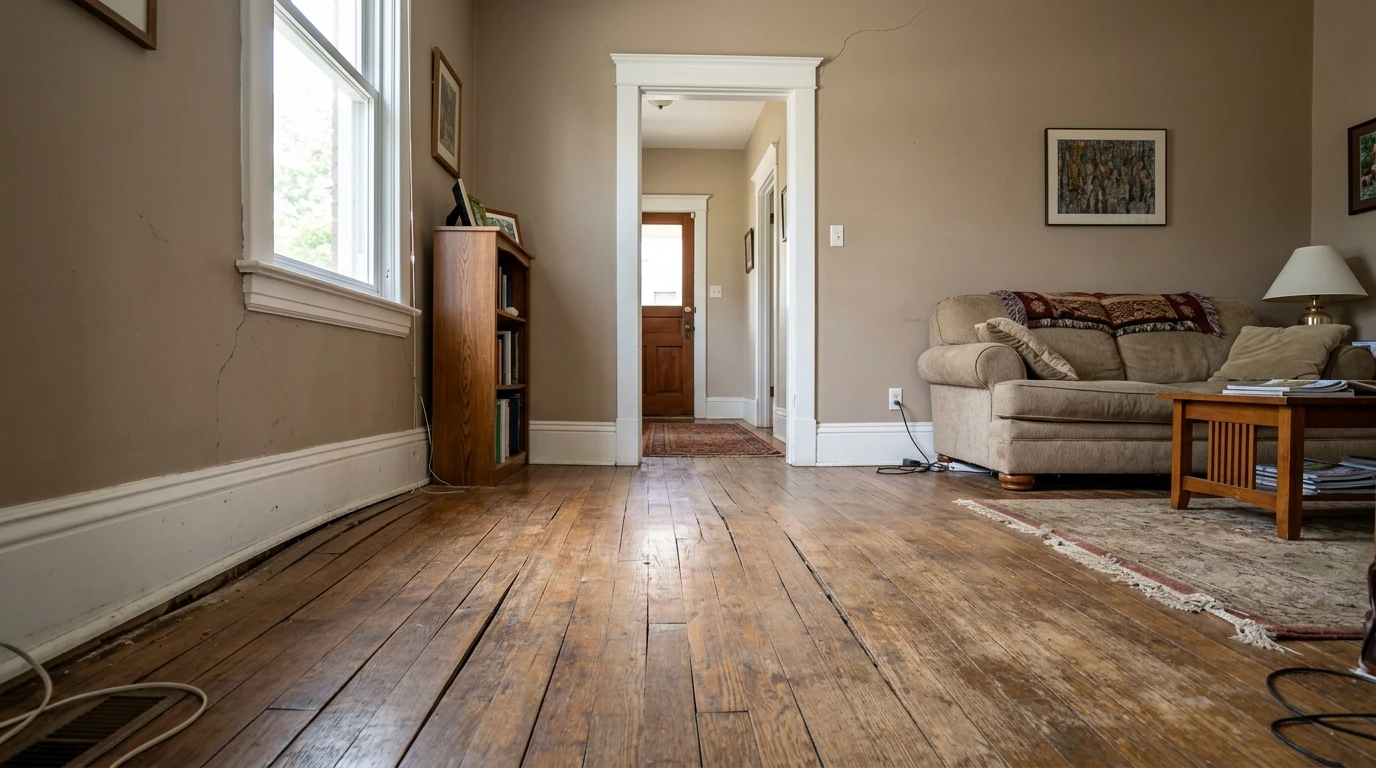
- Sagging or uneven floors
- Bouncy areas when walking
- Damaged joists or beams
- Separations between flooring and walls
- Supports that no longer appear properly seated
When framing has already been affected, moisture control alone may not restore its structural capacity. The damaged components also need to be evaluated.
Tar Heel Foundation Solutions’ crawl space repair services address damaged crawl spaces and floor support concerns, while more extensive framing problems may require structural repair.
Insulation can become part of the warning system
Wet or sagging insulation is often an early clue.
Moisture adds weight to fibrous insulation and can reduce how well it performs. Basement Systems and other crawl space resources commonly identify falling or wet insulation as a visible sign that moisture conditions have persisted.
Replacing the insulation without correcting the water source usually treats the symptom rather than the cause.
How Crawl Space Water Can Affect Foundation Soil and Walls
Water around a foundation becomes more complicated because the structure depends on the soil supporting it.
Different soils respond differently to changing moisture conditions.
Some soils drain relatively well. Others retain more water. Expansive clay soils can change volume as their moisture content changes, while poorly compacted or weakened soils can contribute to movement beneath foundations.
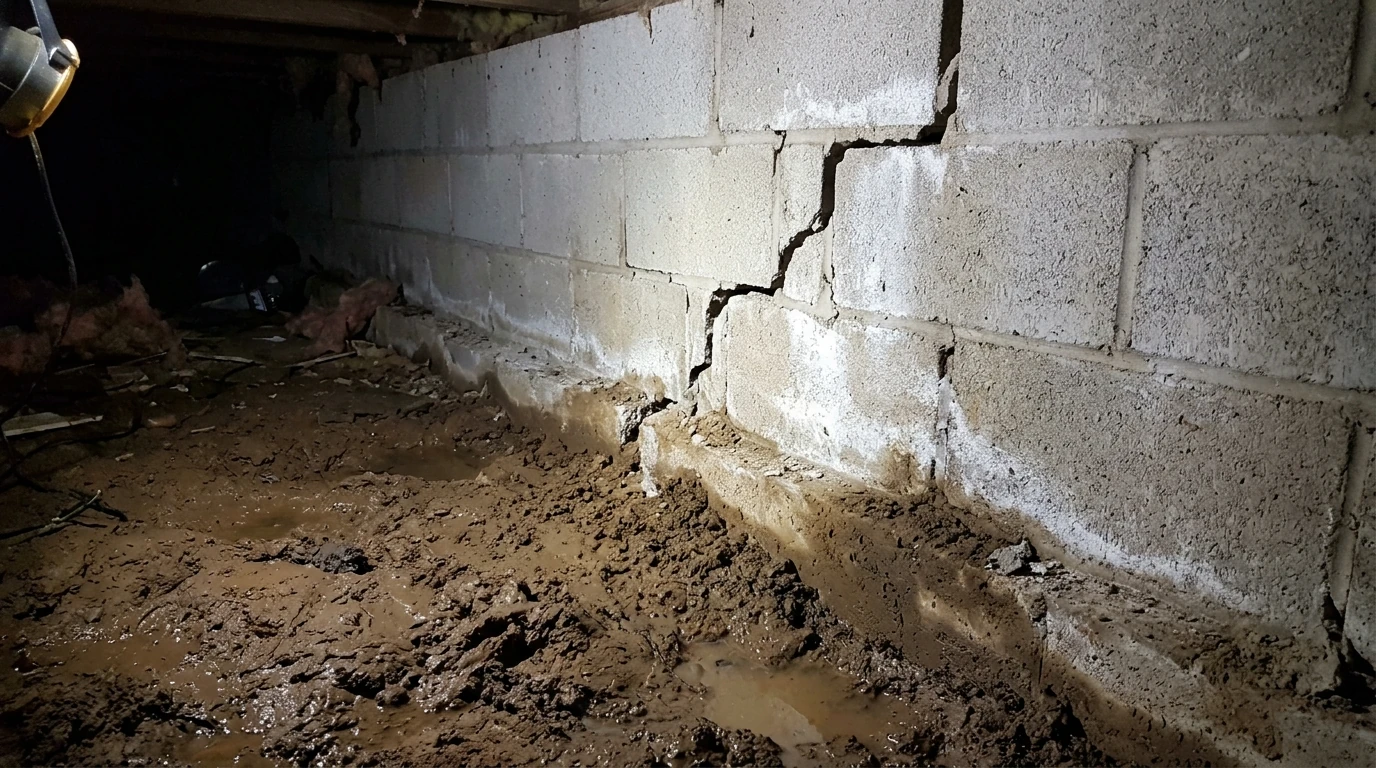
Tar Heel Foundation Solutions identifies poor drainage, expansive clay soil, heavy rain, drought cycles, and plumbing leaks among the factors that can contribute to foundation problems in its North Carolina and South Carolina service region.
The important word is contribute.
Finding water beneath a home does not prove the foundation has moved.
Likewise, finding a crack does not prove crawl space moisture caused it. Foundation cracks can develop for several reasons, and sometimes foundation movement creates an opening that allows water inside rather than water being the original cause.
What about hydrostatic pressure?
Water-saturated soil can exert pressure against below-grade foundation surfaces. Drainage conditions, soil type, foundation construction, depth, and site conditions all influence how important that pressure becomes.
This is one reason repeated water accumulation beside foundation walls deserves investigation.
The solution might begin outside with drainage correction rather than inside with a dehumidifier.
Can moisture cause foundation settlement?
It can be part of the conditions that lead to movement, but settlement needs to be diagnosed rather than assumed.
A professional should look for evidence such as:
- Changes in floor elevation
- Foundation or masonry cracking
- Displaced structural members
- Pier or footing movement
- Soil erosion or voids
- Doors or windows becoming difficult to operate
- Recurring changes that appear to be progressing
Where actual foundation movement is present, foundation stabilization may need to be considered separately from the moisture system.
Warning Signs You May Notice Before You See the Source
Most homeowners do not regularly crawl underneath their houses.
Fortunately, moisture often leaves clues elsewhere.
Musty odors
Persistent musty smells, especially near floor registers or lower portions of the house, can indicate damp conditions underneath.
An odor does not tell you the source, but it provides a reason to investigate.
Condensation
Water droplets on ducts, pipes, or other cool surfaces suggest that humid air may be reaching its dew point inside the crawl space.
Sagging insulation
Insulation hanging below the joists often indicates prolonged dampness, installation failure, pest activity, or a combination of those conditions.
Uneven or bouncy floors
Floor movement deserves more attention because it may indicate deterioration or inadequate support below.
It does not automatically mean foundation failure, but it should not be diagnosed from the finished floor alone.
Visible fungal growth or deteriorated wood
Dark staining is not enough to identify a material or determine its seriousness. Visible growth combined with damp, soft, crumbling, or damaged framing deserves professional evaluation.
Foundation cracks or wall movement
New cracks, expanding cracks, bowed foundation walls, or other signs of structural movement belong in a different category from humidity alone.
These symptoms may justify a broader structural inspection rather than only moisture treatment.
For homeowners dealing with more than one structural concern, Tar Heel’s residential foundation services provide a useful overview of the different repair categories.
Moisture Damage and Foundation Damage Are Not the Same Thing
This is one of the most useful distinctions a homeowner can make.
A wet crawl space is a condition.
Foundation damage is a structural outcome.
They can occur together, but one does not automatically prove the other.
Imagine two homes after a week of heavy rain.
In the first home, a disconnected downspout has created a puddle along one side of the crawl space. The joists are still sound, the supports have not moved, and there are no structural symptoms upstairs.
The immediate problem is water management.
At the second home, moisture has been present repeatedly for years. Several wooden members are deteriorated, floors are sagging, and an interior support has shifted.
That situation may require both moisture correction and structural repair.
The visible water could look similar in both homes, yet the repair plans would be very different.
This is why diagnosis should answer two separate questions:
Where is the moisture coming from?
What has already been damaged because of it?
Answering only the first question can miss structural deterioration. Answering only the second can result in repairs while the moisture source continues damaging the building.
How a Professional Tracks Down the Real Source
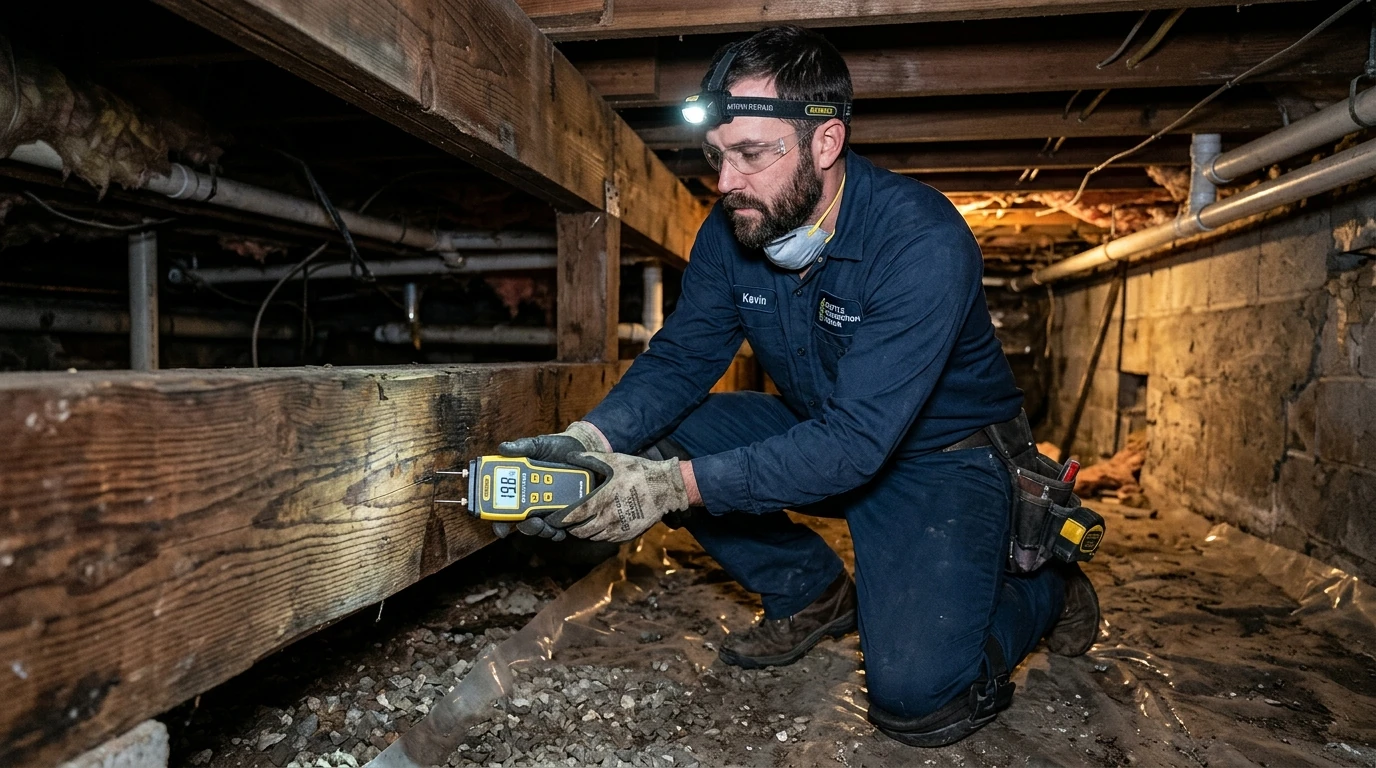
A useful crawl space inspection is more than a quick look at the vapor barrier.
The inspector should try to reconstruct how water is moving through the property.
Start outside the crawl space
The exterior often provides the first clues.
Important areas include gutters, downspouts, grading, nearby hard surfaces, drainage paths, low areas, and places where water collects against the foundation.
Building America guidance specifically recommends addressing roof runoff, ground slope, exterior drainage, and other sources of bulk water before enclosing a crawl space.
Inspect the ground and foundation
Inside the crawl space, the pattern of moisture matters.
Water concentrated near one wall may point toward exterior drainage. Broad dampness over exposed earth suggests ground vapor may be contributing. A localized wet area beneath plumbing may require a completely different repair.
Foundation walls should also be checked for cracks, staining, movement, and evidence of repeated water entry.
Examine the structure above
Joists, beams, subflooring, piers, posts, and connections should be examined where conditions allow.
An inspection may include moisture measurements and observations of deterioration or movement.
The goal is not simply to prove that water exists. It is to determine whether the structural system has been affected.
Compare crawl space symptoms with the house above
Sagging floors, sticking doors, wall cracks, or other visible changes may provide additional information.
No single symptom establishes the cause on its own.
Professionals look for patterns that support the same diagnosis.
Fix Crawl Space Moisture in the Right Order
A lasting moisture plan usually works from the source toward the symptom.
1. Stop active water entry
Correct plumbing leaks, failed condensate drains, roof runoff, poor grading, and obvious drainage problems first.
A vapor barrier should not be expected to solve water that is actively flowing beneath it.
Building America states directly that drainage and moisture problems should be corrected before sealing and insulating a crawl space.
2. Manage water that cannot be kept out through exterior measures alone
Some properties require crawl space drainage or a sump system because groundwater or site conditions continue to introduce water.
The appropriate system depends on where and how the water enters.
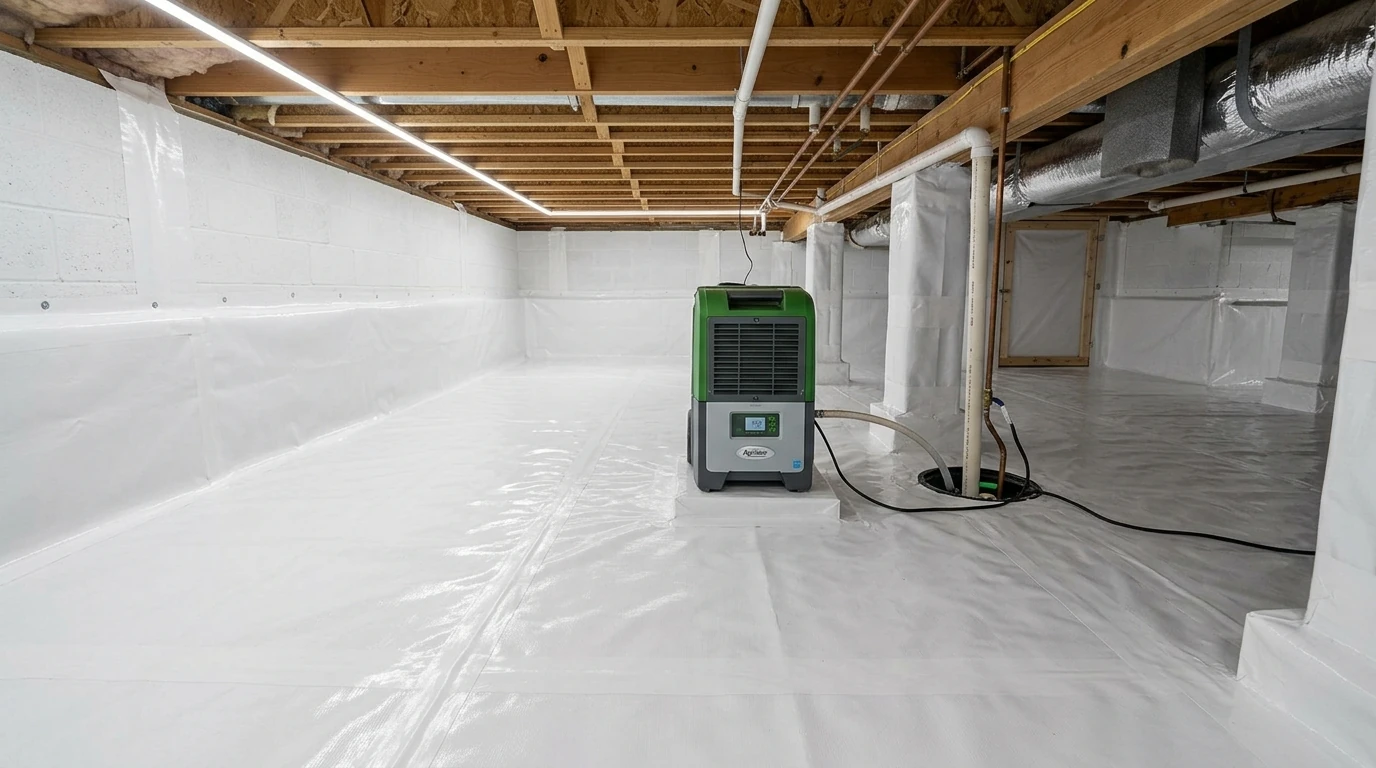
3. Control ground moisture
Exposed soil can continuously release water vapor.
A properly installed ground vapor barrier separates the crawl space air from that moisture source. Building Science Education recommends continuous ground coverage with sealed seams and detailing around walls, piers, and penetrations.
4. Address outside air and uncontrolled leakage
Where appropriate for the building and climate, sealing crawl space openings can reduce the amount of humid outdoor air entering the space.
This work needs to coordinate with insulation, combustion equipment, HVAC systems, drainage, code requirements, and other building conditions.
5. Control remaining humidity
A correctly sized dehumidification system can help manage residual humidity after the major water sources have been addressed.
It should not be used as a substitute for fixing standing water, plumbing leaks, or failed drainage.
6. Repair damaged structural components
Once moisture is controlled, deteriorated joists, beams, subflooring, piers, or support systems can be addressed according to their condition.
Homes with both water problems and support damage may need a plan combining moisture work with structural repair services.
Common Fixes That Fail When the Cause Is Misdiagnosed
Crawl space moisture problems often continue because one visible symptom was treated while the water pathway remained unchanged.
Running a dehumidifier against active water
A dehumidifier removes moisture from air.
It does not redirect a downspout, repair a leaking pipe, lower groundwater, or stop rainwater from entering through a foundation opening.
Installing new insulation before drying the space
New insulation placed back into the same damp environment can become wet again.
Moisture correction should come first.
Laying plastic over standing water
A ground vapor barrier is useful for controlling soil vapor, but it is not a substitute for proper drainage where bulk water is collecting.
Water trapped beneath a liner still needs somewhere to go.
Assuming every crack needs foundation repair
Cracks vary significantly in cause and importance.
Some may be associated with movement. Others may be nonstructural or related to normal material behavior.
The crack pattern, width, displacement, location, surrounding symptoms, and whether it is changing are more useful than the presence of a crack alone.
Repairing structural damage without stopping the moisture
Replacing damaged wood while leaving a drainage or humidity problem active creates the conditions for damage to return.
The water source and the structural consequence need to be treated as connected parts of the same investigation.
Homeowners dealing with moisture in more than one below-grade area can also review basement and garage services when foundation walls or adjacent structural areas are involved.
Frequently Asked Questions
Can crawl space moisture cause a musty smell upstairs?
It can. Moisture beneath a home can create damp conditions and odors, and air can move between the crawl space and the living areas above. However, an odor by itself cannot identify whether the underlying source is ground vapor, water intrusion, condensation, a plumbing problem, or another condition. EPA guidance confirms that moisture from crawl spaces can move into other parts of a building.
Can you have crawl space moisture without standing water?
Yes. Ground vapor, humid air, capillary moisture, and condensation can create damp conditions without producing visible puddles. DOE guidance specifically describes moisture entering crawl spaces as both liquid water and water vapor.
Does a wet crawl space always mean foundation damage?
No. Water may come from plumbing, runoff, groundwater, exposed soil, or condensation without the foundation having moved or failed.
Moisture becomes more structurally concerning when it persists or appears with deteriorated supports, sagging floors, changing cracks, wall movement, corrosion, or other structural symptoms.
Will a vapor barrier stop water from entering my crawl space?
Not necessarily. A vapor barrier primarily limits moisture moving upward from the soil. Active water intrusion caused by runoff, drainage problems, groundwater, or leaks requires the source of that water to be addressed.
Is condensation the same as a foundation leak?
No. Condensation occurs when humid air reaches a sufficiently cool surface. Water intrusion involves liquid water entering from another source. Both can leave a surface damp, which is why NC State Extension advises that damp foundation surfaces should not automatically be interpreted as leakage.
Why is my crawl space wet only after rain?
Moisture that appears predictably after storms can point toward roof runoff, grading, surface drainage, saturated soil, groundwater, or entry around the foundation. Exterior drainage conditions should be examined before assuming the problem begins inside the crawl space.
Can crawl space moisture damage floor joists?
Persistent moisture can create conditions that promote mold and wood deterioration in floor joists and rim joists. How serious the damage is depends on the duration and severity of exposure and the actual condition of the wood. DOE specifically identifies mold and rot along crawl-space floor and rim joists as potential moisture-related problems.
Should I install a dehumidifier or fix the drainage first?
If liquid water is entering because of drainage, runoff, groundwater, or a leak, address that source first. A dehumidifier manages moisture in the air rather than stopping bulk water from reaching the crawl space. Building America recommends treating bulk-water drainage problems before sealing and insulating crawl spaces.
Schedule a Crawl Space Inspection
Recurring crawl space moisture should be diagnosed before it is allowed to continue affecting insulation, framing, supports, masonry, or other materials beneath the home.
If you are seeing standing water, persistent humidity, wet insulation, musty odors, deteriorated wood, sagging floors, recurring seepage, or other signs of moisture beneath your home, Tar Heel Foundation Solutions can evaluate the crawl space, drainage conditions, moisture sources, and visible structural concerns.
The objective is not to assume that every moisture problem requires the same repair. It is to identify what is happening beneath your home and determine which moisture-control or structural solution fits the actual conditions.
Schedule a crawl space inspection with Tar Heel Foundation Solutions.