

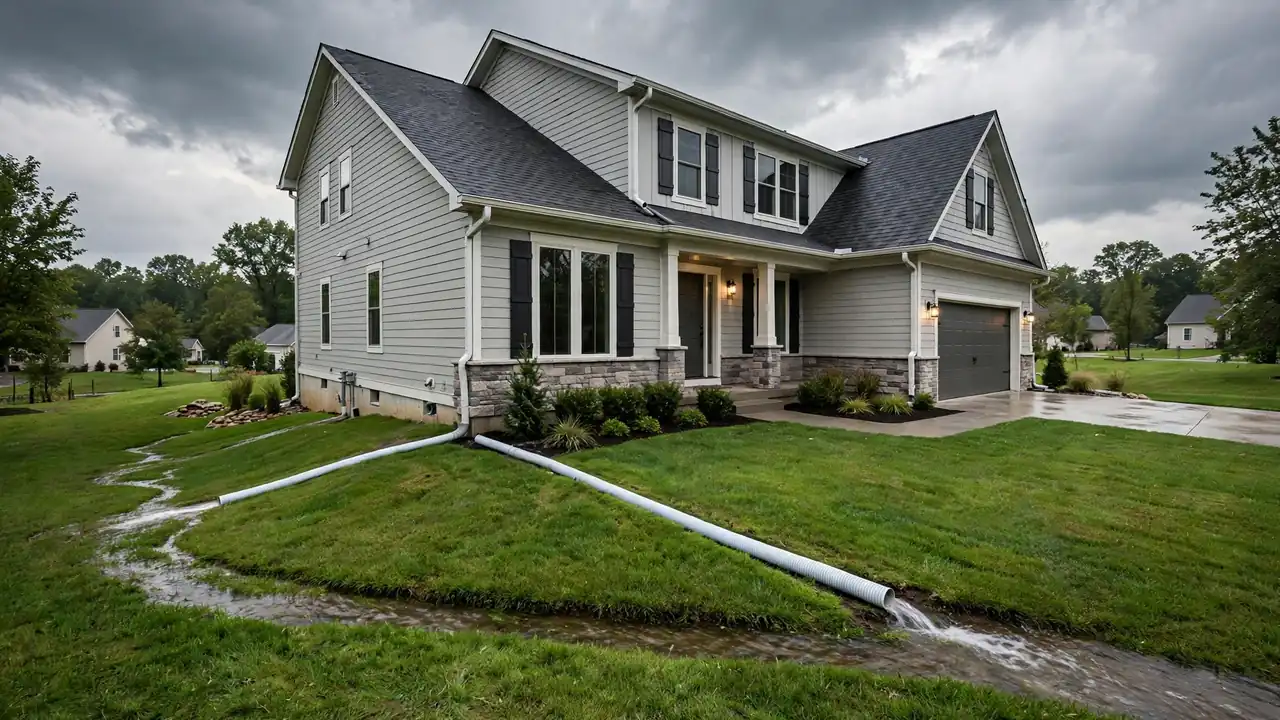
A puddle beside your house may disappear after the rain, but that doesn’t tell you where the water went. Some may have soaked into the ground beside your foundation. When this happens repeatedly, poor foundation drainage can change soil conditions and contribute to problems beneath the home.
Foundation drainage includes the grading, collection systems, and discharge routes used to move excess surface water and groundwater away from the building.
The first step is understanding where water collects, how it reaches the building, and whether there are signs of damage. That helps you decide whether the property needs routine maintenance, drainage improvements, a foundation evaluation, or a combination of these.
Can Water Cause Foundation Damage?
Yes. Water can contribute to foundation damage by changing the strength or volume of supporting soil, carrying soil away, and building pressure against below-ground walls. The outcome depends on soil conditions, foundation construction, the amount of water, and how effectively it drains away.
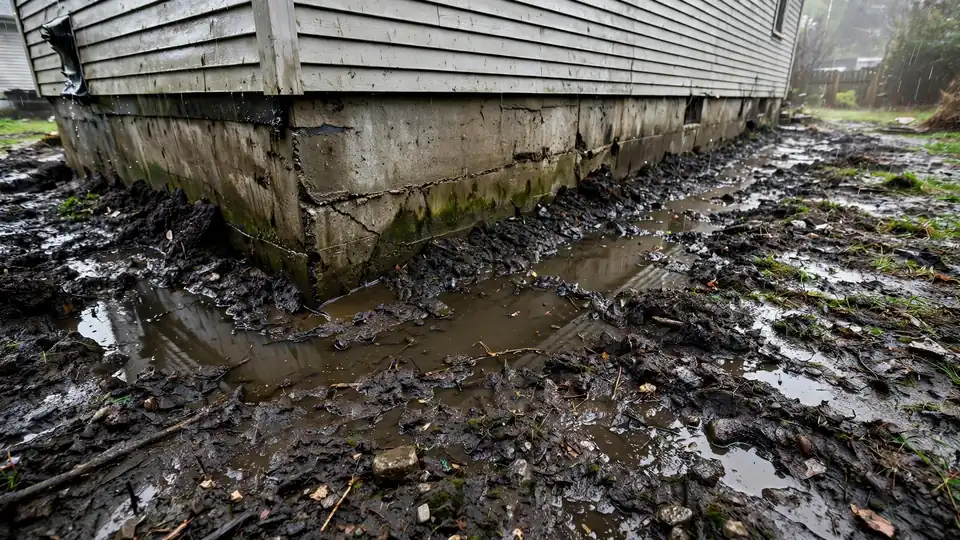
When water accumulates against a below-ground wall, it exerts hydrostatic pressure, meaning pressure from water at rest. This can force seepage through openings and add lateral loads that the wall must resist. Soil swelling can add pressure of its own.
Occasional wet ground does not automatically mean your foundation is damaged. Repeated pooling, recurring seepage, or visible movement deserves closer attention. A useful question is whether water keeps returning to the same area and whether anything around that area is changing.
How Excess Water Changes the Soil Beneath a Home
A foundation transfers the building’s weight into the ground. When the ground behaves differently from one area to another, the structure can experience uneven support.
Swelling and Shrinking Can Create Uneven Movement
Some soils contain clay minerals that swell as they absorb water and shrink as they dry. If moisture changes unevenly around a house, one section may move differently from another. This can stress foundations, floors, and connected walls.
Not every clay soil behaves the same way. Soil color or a muddy yard cannot establish how much movement a property is likely to experience. Site investigation or soil testing may be needed.
Wetting Can Reduce Support in Susceptible Soils
Certain soils weaken or compress when they become wetter under a building’s load. Loose fill can also settle. If one part of a foundation settles more than another, the resulting movement is called differential settlement.
Poor drainage may contribute, but it is not the only possible cause. Construction history, soil preparation, leaks, and foundation design can also matter.
Moving Water Can Carry Soil Away
Concentrated water runoff can erode exposed ground around a home. Where erosion reaches supporting soil, it may contribute to voids or loss of support beneath concrete or foundation elements.
A shallow washout in a flower bed does not prove that a footing has been undermined. It does show a flow path worth investigating, especially if the washout keeps growing.
Where Foundation Drainage Problems Usually Start
Water problems often begin above ground, well before moisture appears indoors. Common sources include:
- Gutters that overflow or leak at joints.
- Downspouts that release water beside the house.
- Ground that slopes toward the foundation or contains settled low spots.
- Patios and driveways that direct runoff toward exterior walls.
- Landscape edging or raised beds that interrupt an existing drainage route.
- Irrigation overspray, leaking hoses, or underground plumbing leaks.
Water may also travel underground from higher ground or collect because of groundwater conditions. A damp area that remains during dry weather deserves a different investigation from a puddle that appears directly beneath an overflowing gutter.
For example, imagine a downspout discharging into a planting bed enclosed by solid edging. The gutter may carry water off the roof correctly, while the bed holds that water beside the foundation. Both the discharge point and the surrounding landscape need attention.
Warning Signs That Deserve a Closer Look
Drainage symptoms and structural symptoms should be considered together, without assuming one proves the cause of the other.
Signs That Water Is Collecting or Entering
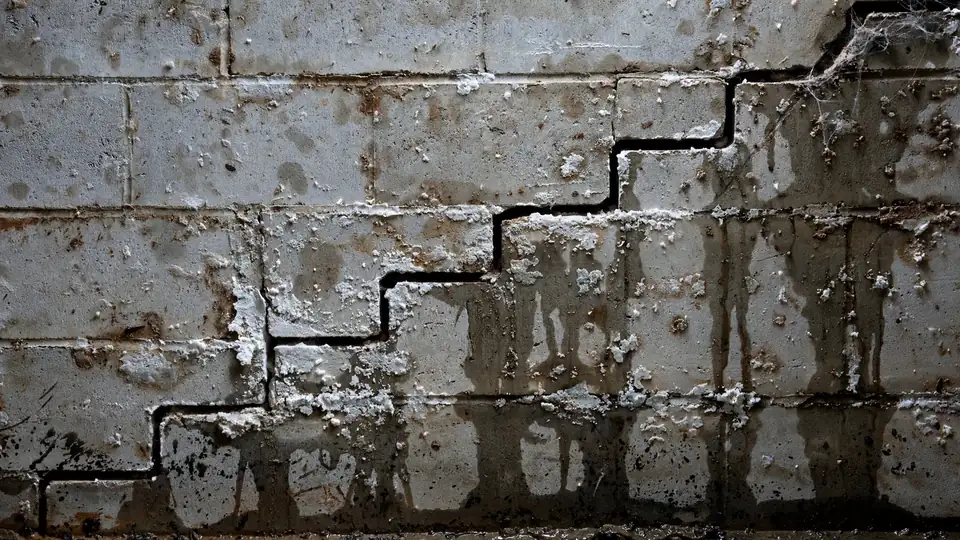
Watch for recurring puddles, eroded channels, damp masonry, water stains, and moisture that returns after rain. White mineral deposits on masonry, called efflorescence, can indicate past moisture movement, although they do not establish whether a leak is currently active.
Signs That the Building May Be Moving
Changing cracks, stair-step cracks in masonry, uneven floors, wall displacement, and doors or windows that increasingly bind may justify a foundation repair evaluation.
A sticking door alone can have other causes. A door that starts binding alongside a growing wall crack provides more useful information. Record when each symptom appeared and whether it changes after wet weather.
Visible wall bowing, sudden movement, or significant displacement warrants prompt professional assessment. Don’t wait for another storm to see what happens.
Follow the Water Before Choosing a Fix
Document what you can observe from a safe, accessible location during or after rainfall. Avoid entering flooded crawl spaces or approaching visibly unstable walls.
- Identify the source. Note whether water arrives from the roof, a hard surface, higher ground, or somewhere you cannot see.
- Trace its route. Follow the visible path toward the low spot or building. Photograph where runoff changes direction.
- Check the destination. Find out where each downspout or drain releases water. A buried pipe should not be assumed to have a working outlet.
- Compare with indoor symptoms. Record where seepage or staining appears and when it starts relative to the rain.
- Save the history. Keep dated photos and notes about landscaping changes, previous repairs, irrigation, and recurring cracks.
These observations give an inspector useful context. They cannot establish hidden soil conditions or determine the cause of structural movement on their own.
How Grading and Roof Runoff Work Together
Grading is the shaping of the ground surface to direct water. Effective grading gives runoff a route away from the building, while gutters and downspouts collect roof water and deliver it to a suitable discharge point.
Correct the Route Around the House
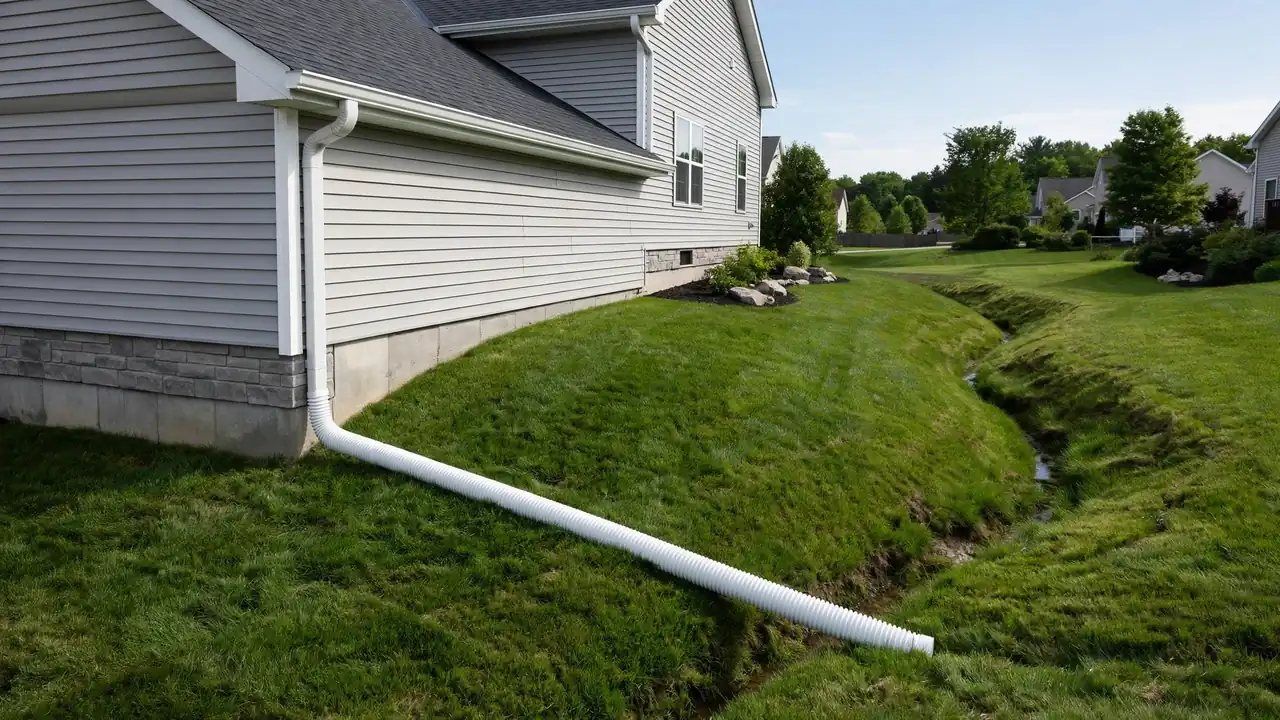
Changing a low spot may help when the surrounding ground can carry water away. Where space is limited, a designed surface drain or swale may be needed. A swale is a shallow channel that guides surface runoff.
Adding soil against a wall requires care. Preserve appropriate clearance below siding and keep vents and masonry drainage openings clear. The correct elevations depend on the building and site.
A patio that has settled toward the house can also change drainage. An assessment for concrete lifting and leveling can establish whether the slab’s condition and support make correction practical.
Check Where Roof Water Ends Up
A downspout extension only helps if its outlet leads to ground that carries water away. Check that it does not discharge into another low spot or send water back toward the house.
The discharge location should also avoid creating erosion or drainage problems for neighboring properties. Plan the complete route before extending or burying a pipe.
Choose Drainage Improvements for the Actual Problem
Different drainage measures handle different water sources. The right choice depends on where water travels, available elevations, soil conditions, and a suitable outlet.
| Observed Problem | Approach to Evaluate | Important Limitation |
|---|---|---|
| Roof water collects beside the house | Gutter repairs and downspout discharge improvements | The outlet must carry water away without creating another problem. |
| Runoff crosses the yard toward the building | Regrading, a swale, or surface collection drains | The route needs enough capacity for the flow it receives. |
| Water travels through soil toward the foundation | An interceptor or subsurface drain, sometimes called a French drain | Placement, depth, filtering, and the outlet affect performance. |
| Water accumulates beside below-ground foundation walls | Evaluation of perimeter drainage and wall protection | Existing damage, access, and excavation risks need assessment. |
| Collected water cannot leave by gravity | A suitable sump and pump arrangement | Equipment, power, discharge, and maintenance must be considered. |
A gravel trench without a suitable outlet may simply collect water. Likewise, a buried drain intended for subsurface flow may not handle heavy surface runoff adequately.
Retaining walls also need attention when they influence the drainage route. Bulging, leaning, or displaced sections call for a retaining wall repair assessment, alongside a review of water behind the wall.
Why a Damp Crawl Space May Need More Than Drainage
Water entering a crawl space and moisture in the air are related problems, but they can have different sources. Runoff, groundwater, plumbing leaks, evaporation from exposed soil, and condensation may all contribute.
An assessment for crawl space moisture control can help identify which conditions need attention. Depending on the findings, the plan may include drainage, ground vapor control, humidity management, or leak repairs.
A dehumidifier removes moisture from the air; it does not stop flowing water. Similarly, covering the soil does not repair damaged floor supports. If framing or supports have deteriorated, crawl space repair may be needed as part of the work.
What Drainage Improvements Can and Cannot Repair
Improving drainage can reduce unwanted water exposure. It does not automatically reverse settlement, straighten a displaced wall, or restore deteriorated structural materials.
Where movement has already occurred, a professional may recommend foundation stabilization based on the foundation’s condition and the ground supporting it. Damaged slabs may require a separate concrete slab repair assessment.
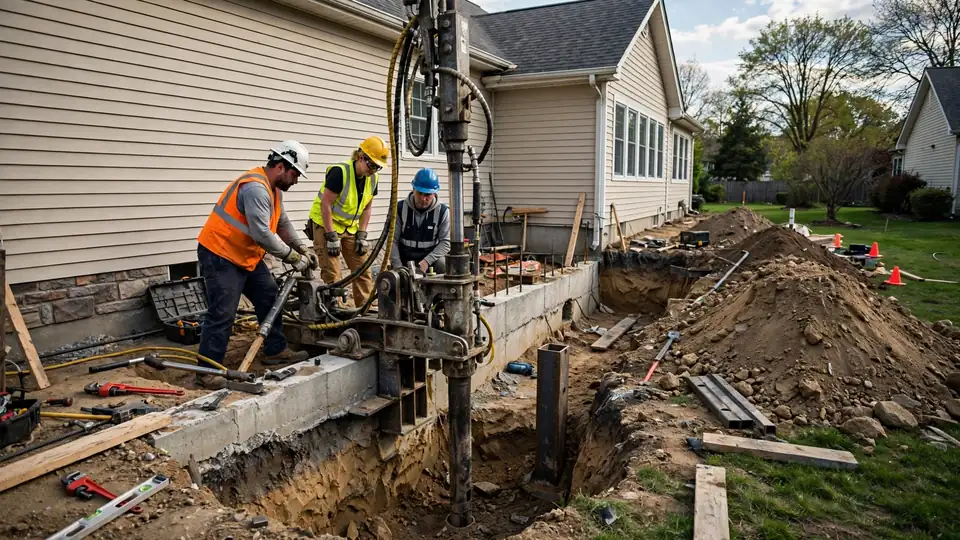
An example helps explain the distinction: redirecting a downspout may stop repeated soaking at one corner, but a foundation that has settled there still needs evaluation. The water source and the existing damage are separate parts of the repair decision.
Ask what each proposed measure is expected to address, what it will leave unresolved, and how the result will be checked. Drainage work should not be presented as a guarantee against every future moisture or foundation problem.
Keep Water Moving After the Work Is Finished
Drainage needs ongoing attention because leaves accumulate, outlets become obstructed, and landscaping changes. After substantial rain, check accessible areas for returning puddles, new erosion, and fresh signs of seepage.
Keep gutter outlets and surface drain grates clear. Confirm that downspout extensions remain connected and that new planting beds, edging, or paving have not blocked the intended water route. Follow the maintenance instructions for any installed pumps or drainage equipment.
Continue photographing known cracks or stains from the same position. If a symptom returns, the dates and rainfall notes can help distinguish a blocked component from an unresolved water source.
When Is It Time to Book a Foundation Inspection?
Book an inspection when water repeatedly collects against the home, moisture keeps returning indoors, or drainage concerns appear alongside cracks, uneven floors, or wall movement. You do not need to determine the cause before requesting help.
Bring your photos, rainfall notes, and any records of previous work. Ask the inspector to explain the likely water source, whether structural damage is present, and whether further investigation by a drainage specialist or structural engineer is needed.
Tar Heel Foundation Solutions provides foundation repair and crawl space services. If you are concerned about foundation drainage or signs of movement, contact the team to discuss an inspection and the appropriate next steps for your property.