

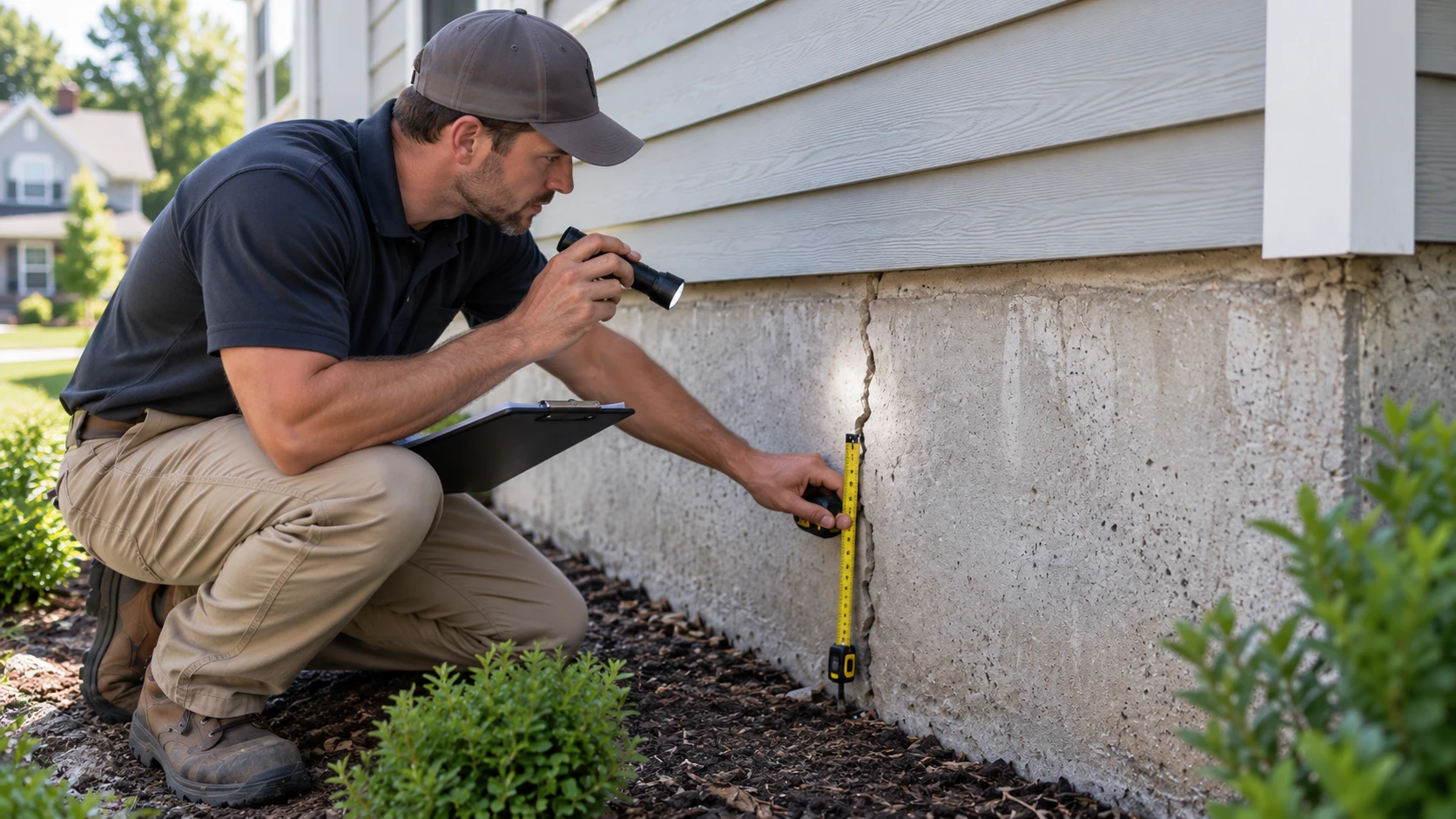
Finding a crack in your foundation can be concerning, especially when you are not sure whether it represents normal concrete behavior or a developing structural problem. The good news is that not every visible crack means a foundation is failing. Concrete and masonry can crack because of shrinkage, soil movement, moisture changes, temperature fluctuations, settlement, and pressure against foundation walls.
The more important question is not simply whether a crack exists. Homeowners should consider where the crack appears, which direction it runs, whether the surrounding wall has moved, and whether the crack has changed over time.
A thin, stable crack may require a very different response from a horizontal crack in a bowing basement wall. Likewise, a concrete crack that allows repeated water intrusion may deserve attention even when significant structural movement is not immediately visible.
Understanding these differences can help homeowners recognize when monitoring may be reasonable and when a professional foundation assessment should be the next step.
Are Foundation Cracks Normal?
Some foundation cracks can occur without indicating serious structural damage.
Concrete naturally loses moisture as it cures and dries. This process can create shrinkage stresses, particularly where movement is restrained. Small cracks may therefore appear even when the foundation remains structurally stable.
The age of the crack also matters. A crack that formed years ago and has remained unchanged may tell a different story from one that recently appeared and continues to widen.
Homeowners should pay attention to several details:
- Whether the crack appears new
- Whether it has grown longer or wider
- Whether one side appears displaced
- Whether nearby walls or floors have shifted
- Whether water enters through the crack
- Whether other cracks are appearing nearby
A crack should be considered as one piece of evidence rather than a diagnosis by itself.
If you are unsure whether visible cracking is related to normal concrete behavior or foundation movement, a professional foundation repair assessment can help determine the underlying cause.
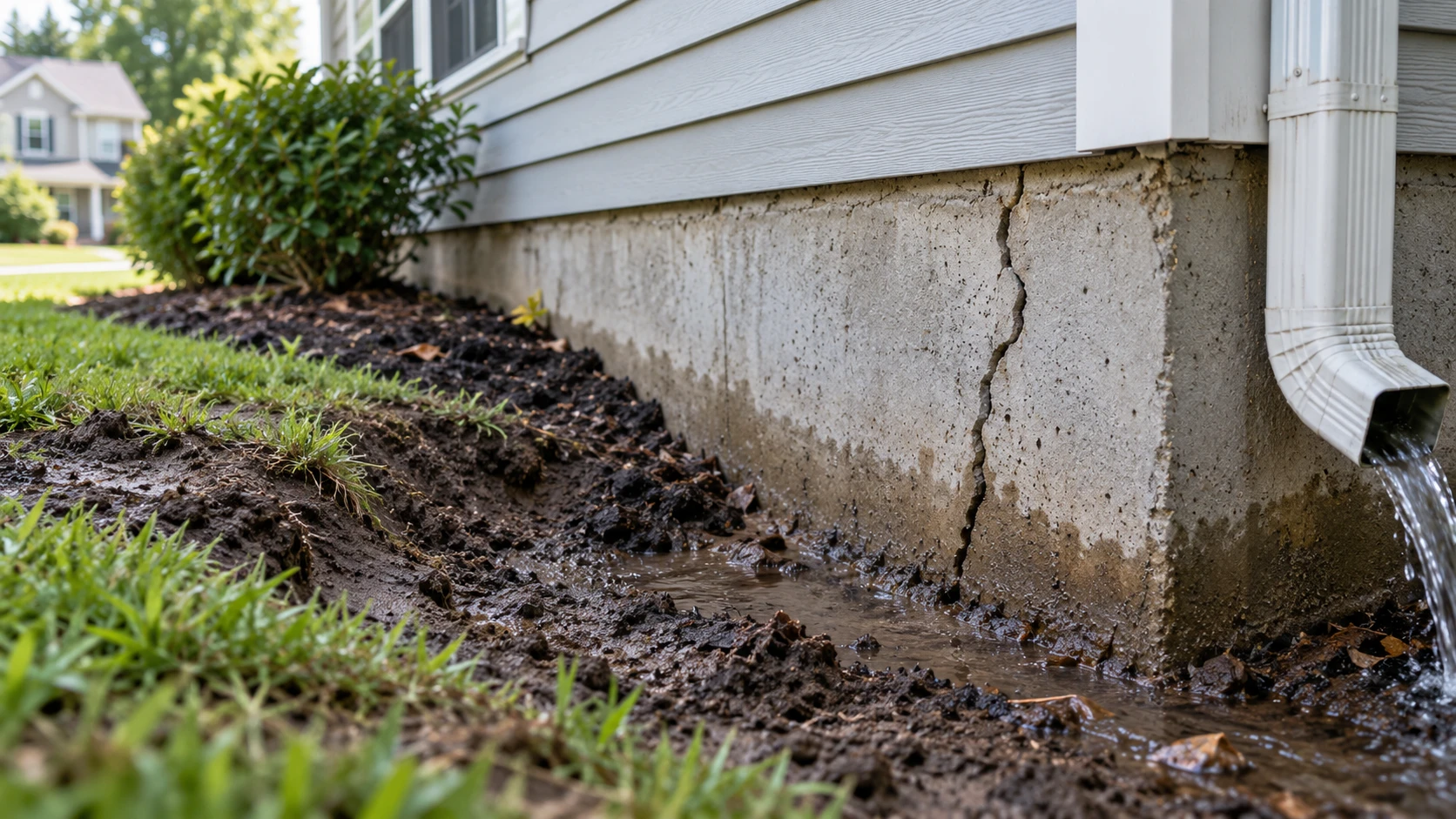
Why Do Foundations Develop Cracks?
Foundations are affected by both the building above them and the ground surrounding them. Changes in soil, moisture, structural loading, and concrete itself can create stresses that eventually appear as visible cracking.
Understanding the likely cause is important because different causes require different responses.
Concrete Shrinkage
Concrete contains moisture when it is placed. As it cures and dries, some shrinkage naturally occurs.
If that movement is restrained, tensile stresses may develop. Since concrete performs better under compression than tension, cracking can sometimes occur as those stresses build.
Shrinkage-related cracking does not necessarily mean that the entire foundation is moving. Location, direction, surrounding conditions, and changes over time all help provide context.
Soil Settlement
A foundation transfers the weight of a building into the soil below it.
If the supporting soil settles unevenly, one part of the foundation may move more than another. This is commonly described as differential settlement.
The resulting movement may contribute to cracks in foundations, interior walls, floors, or masonry. Homeowners may also notice sticking doors, uneven floors, or gaps around openings.
When movement appears to involve the foundation itself, foundation stabilization may become relevant after the cause has been professionally evaluated.
Expansive or Changing Soil
Some soils change volume as moisture levels change.
Periods of heavy rain can increase soil moisture, while extended dry conditions can cause certain soils to shrink. These repeated changes may influence the support conditions around a foundation.
The effect is not identical on every property. Soil composition, drainage, foundation type, grading, and nearby vegetation can all influence how the foundation responds.
Water and Drainage Problems
Water around a foundation can contribute to several different problems.
Poor grading, clogged gutters, improperly discharged downspouts, drainage issues, or persistent soil saturation may create unfavorable conditions near foundation walls.
Water may also enter through existing cracks, producing dampness, staining, or recurring moisture problems.
Homes with crawl spaces can experience additional moisture concerns. In those situations, crawl space moisture control may be relevant when humidity or water intrusion is contributing to the surrounding problem.
What Does the Direction of a Foundation Crack Tell You?
Crack direction can provide useful clues about what may be happening, but direction alone does not determine whether a crack is serious.
Professionals also consider the foundation material, displacement, crack pattern, moisture conditions, building movement, and surrounding symptoms.
| Crack Pattern | Possible Cause | What Deserves Attention |
|---|---|---|
| Vertical | Shrinkage or localized movement | Widening, water intrusion, displacement |
| Horizontal | Lateral soil pressure or wall movement | Bowing, leaning, increasing separation |
| Diagonal | Differential settlement or localized movement | Growth, displacement, nearby structural changes |
| Stair-step | Movement through masonry joints | Settlement, wall separation, recurring cracking |
| Floor or slab crack | Shrinkage, settlement, voids | Uneven surfaces, sinking, continued movement |
The table can help homeowners understand common patterns, but an inspection is still the best way to determine why a particular crack developed.
Vertical Foundation Cracks
Vertical cracks are frequently found in poured concrete foundation walls.
Some develop as concrete shrinks during curing, while others may result from settlement or structural movement. This is why simply seeing a vertical crack does not automatically tell you whether repairs are needed.
A stable crack that has remained unchanged for years is different from a crack that continues to open or allows water into the basement.
Look for additional symptoms such as:
- Moisture around the crack
- Noticeable widening
- Uneven wall surfaces
- New nearby cracks
- Movement around windows or doors
- Changes in floors above the foundation
The more symptoms that appear together, the more useful a professional assessment becomes.
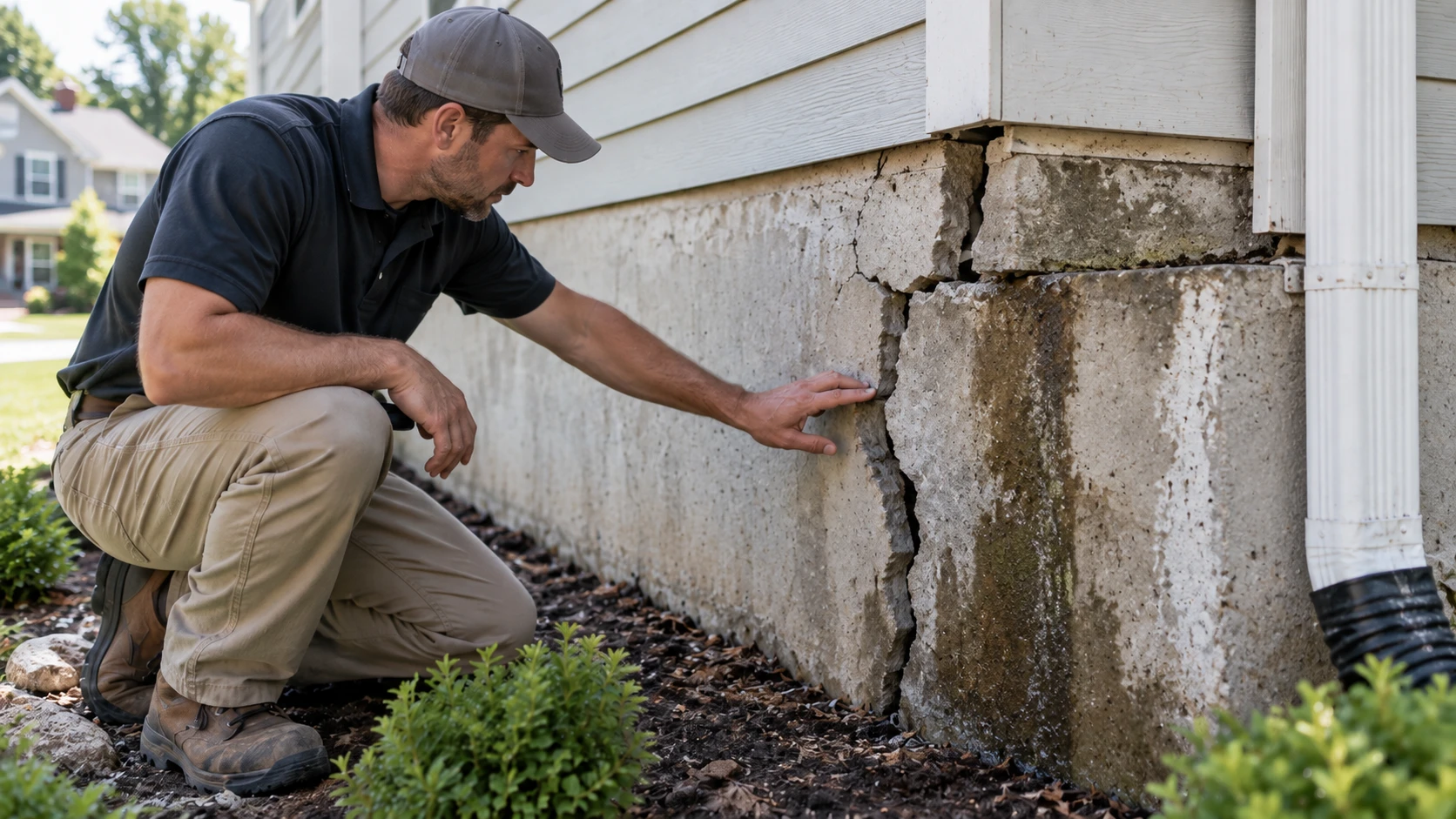
Horizontal Cracks Deserve Closer Attention
Horizontal foundation cracks can deserve more attention, particularly when they appear in basement or retaining walls below grade.
Soil outside the foundation creates lateral pressure against the wall. Moisture can sometimes increase unfavorable soil conditions around the structure.
If the wall begins moving inward, cracking may develop along areas experiencing stress.
Look at the wall from different angles rather than focusing only on the crack. Signs such as inward bowing, leaning, displacement, or separation can provide important context.
Where foundation walls are experiencing lateral movement, earth anchor systems may be one potential stabilization approach after the wall condition has been properly evaluated.
A horizontal crack should not be automatically diagnosed from appearance alone, but it is generally not something homeowners should simply cover with patching material and forget.
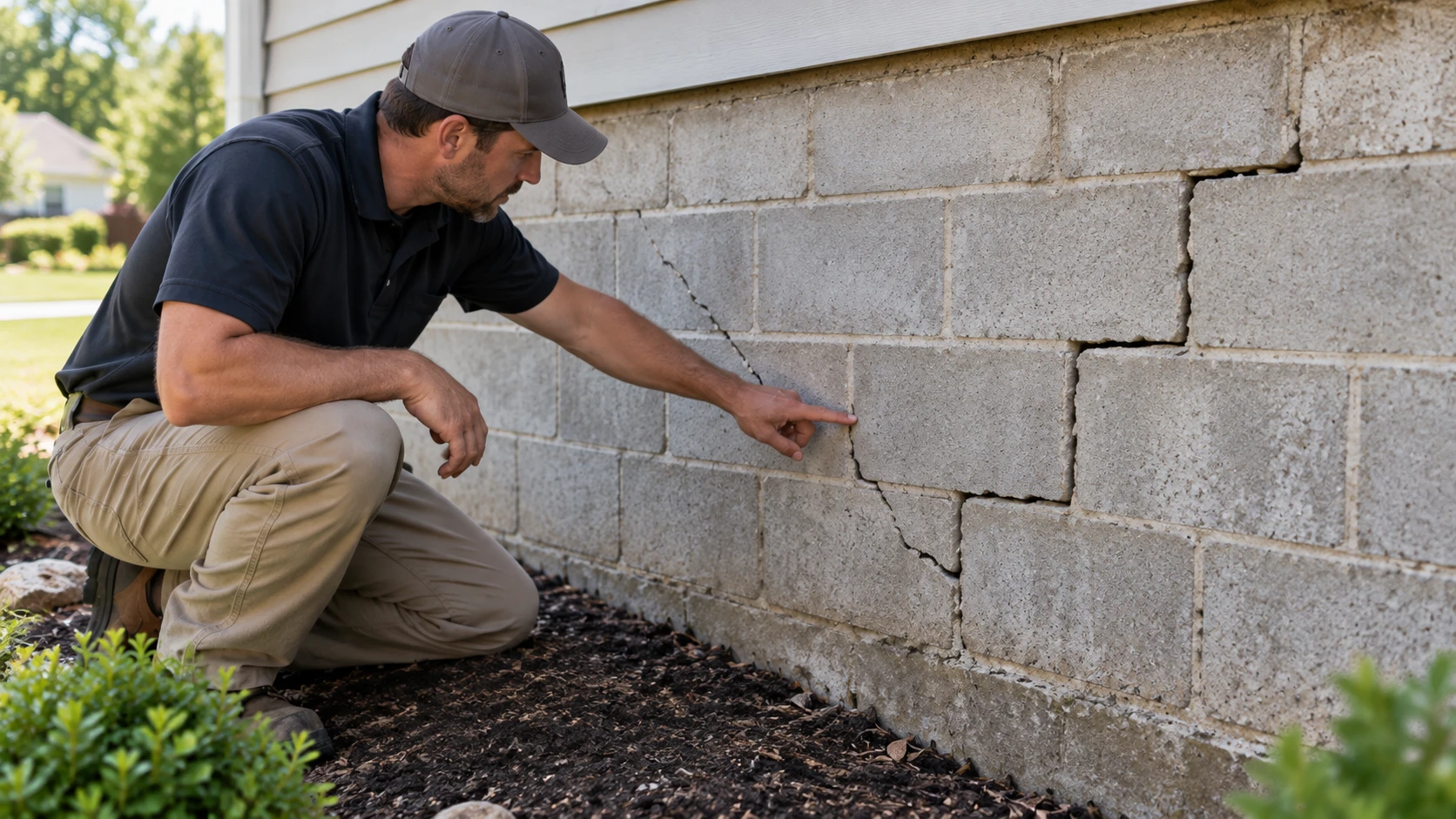
Diagonal and Stair-Step Foundation Cracks
Diagonal cracks often suggest that different parts of a foundation may be moving differently.
In poured concrete, a diagonal crack may travel directly through the wall. In block or brick foundations, movement often follows mortar joints, producing a stair-step pattern.
A stair-step crack becomes more concerning when it appears alongside:
- Noticeable wall displacement
- Separation around windows or doors
- Uneven floors
- Repeated cracking after previous repairs
- Gaps between walls and adjoining surfaces
- Continued changes over time
Not every stair-step crack indicates severe structural failure. The pattern should be evaluated together with the rest of the foundation and building.
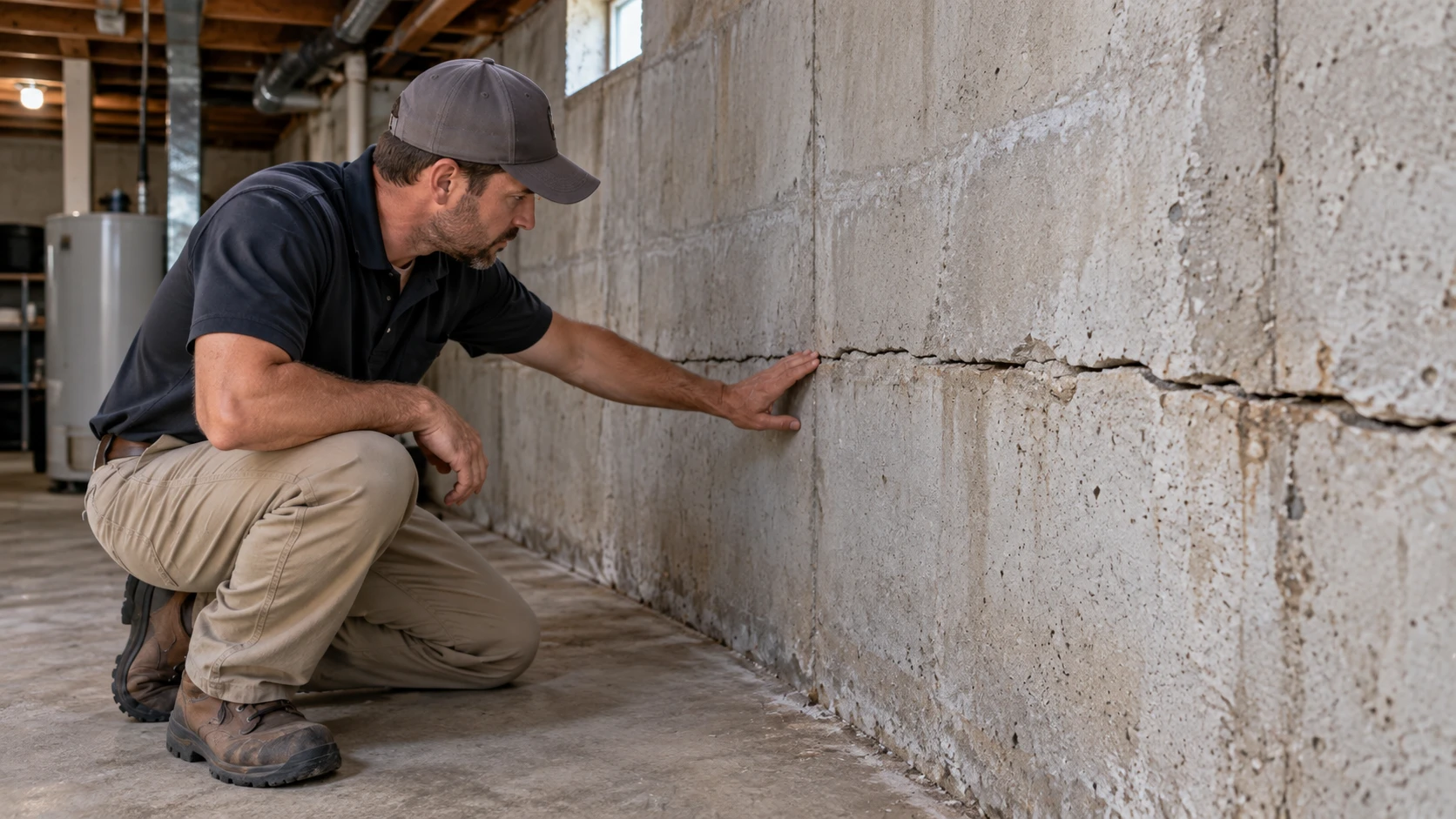
Cracks in Concrete Slabs
Not all foundation-related cracks appear on walls.
Concrete slabs can also develop cracks from shrinkage, movement, soil settlement, voids beneath the slab, or changes in support conditions.
A surface crack in an otherwise level slab may have a different significance from a crack where one side has dropped below the other.
Homeowners should pay particular attention when slab cracking is accompanied by:
- Uneven floor elevations
- Sinking sections
- Noticeable trip hazards
- Repeated cracking
- Separation from adjoining surfaces
- Movement that appears to be continuing
Where cracking is connected to slab movement, concrete slab repair may be more appropriate than simply sealing the visible crack.
Which Foundation Cracks Are More Concerning?
There is no single visual rule that can classify every foundation crack, but certain conditions deserve professional attention.
A foundation inspection should be considered when you notice:
- A crack that continues to grow or change
- Horizontal cracking with wall bowing
- Stair-step cracking with visible displacement
- A noticeable height difference across a crack
- Several new cracks developing in one area
- Sinking or noticeably uneven floors
- Doors or windows that suddenly become difficult to operate
- Separation between walls, floors, ceilings, or trim
- Repeated water intrusion through foundation cracks
- Visible wall movement
- Concrete deterioration around structural areas
- Cracks that reappear after previous repairs
One symptom alone may not identify the exact problem. Several symptoms occurring together can provide stronger evidence that structural movement should be investigated.
Where cracking is connected with broader structural problems, structural repair may need to be considered as part of the repair plan.
Why Crack Width Alone Can Be Misleading
Homeowners often search for a specific crack measurement that determines whether a foundation is safe or unsafe.
In practice, foundation cracks are more complicated than that.
Width matters, but it is only one factor.
A professional may also consider:
- Crack direction
- Crack depth
- Displacement
- Foundation material
- Wall movement
- Water intrusion
- Soil conditions
- Changes over time
- Other structural symptoms
Consider two hypothetical homes.
The first has a visible vertical crack that has remained stable for years. There is no wall displacement, water intrusion, or noticeable movement elsewhere in the house.
The second home has a horizontal crack in a basement wall accompanied by inward bowing and newly sticking doors upstairs.
Even if the cracks appear similar in width, the surrounding evidence makes the situations very different.
This is why diagnosing foundation cracks from photographs or measurements alone can be unreliable.
Changes Over Time Can Provide Important Clues
One of the most useful things a homeowner can do is determine whether a crack is changing.
If you discover a crack, take clear photographs that show both the crack and the surrounding wall. Note the date and check the area periodically.
Look for changes such as:
- Increasing crack length
- Visible widening
- New branching cracks
- Additional nearby cracks
- More noticeable wall movement
- Increasing moisture or staining
- Changes in nearby doors, windows, or floors
Monitoring does not replace professional evaluation when structural movement is suspected, but documenting changes can provide useful information during an inspection.
It can also help distinguish a stable condition from one that appears to be progressing.
Poured Concrete and Masonry Foundations Crack Differently
The type of foundation influences how cracks appear.
Poured concrete foundation walls are continuous concrete surfaces. Cracks may run vertically, diagonally, or horizontally through the wall itself.
Concrete block foundations are made from individual masonry units connected by mortar joints. Movement may therefore follow those joints, creating stair-step patterns.
Brick and other masonry systems may show similar joint-related cracking.
Understanding the material matters because a crack pattern that appears ordinary in one type of foundation may have different implications in another.
Repair methods also vary depending on the material, crack cause, wall condition, and amount of movement present.
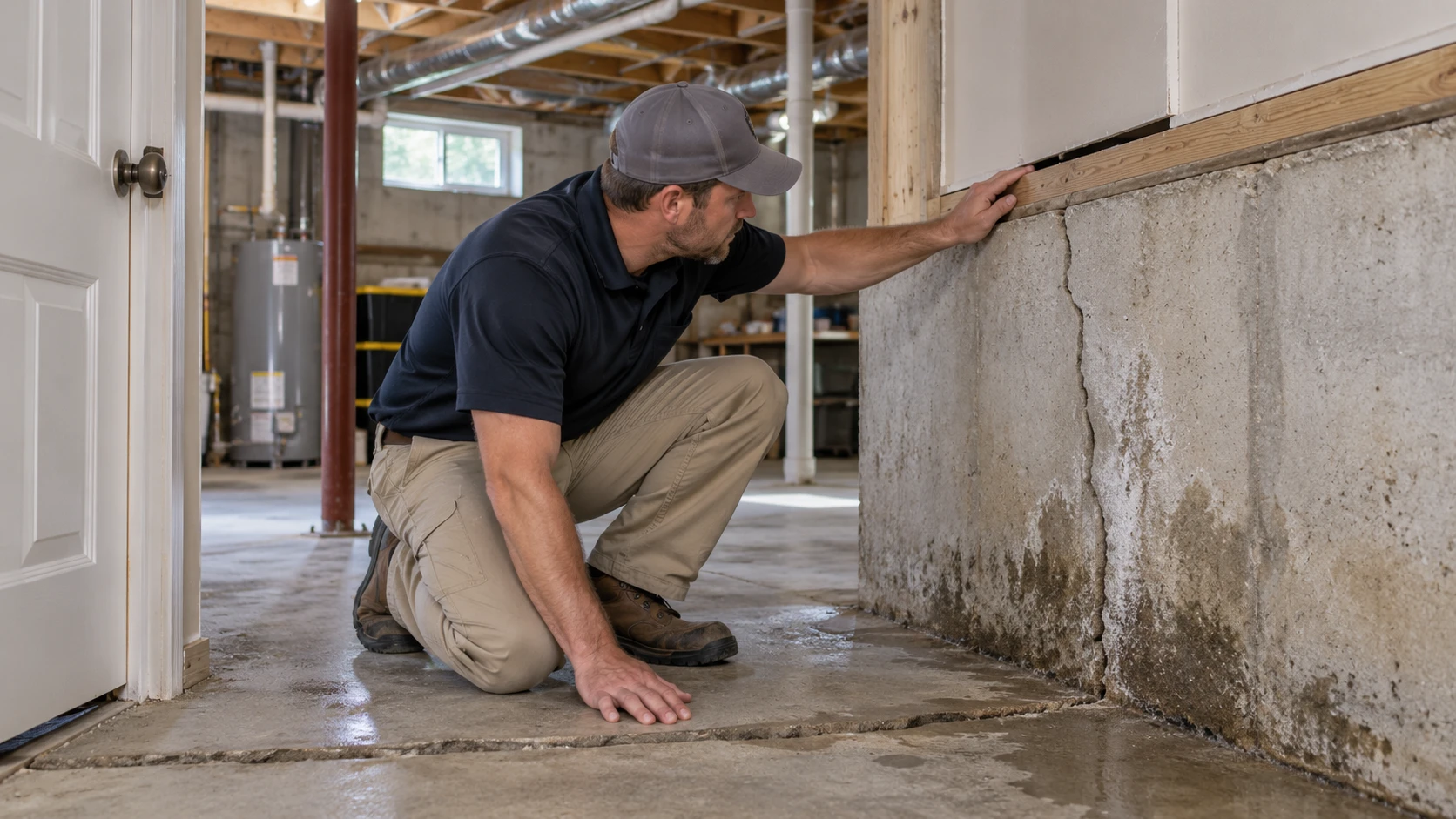
Look Beyond the Foundation Crack
A foundation crack should rarely be evaluated in isolation.
Walk through the rest of the property and look for other signs of movement.
Inside the home, check for:
- Sloping or uneven floors
- Doors that rub or will not close properly
- Windows that become difficult to operate
- Interior drywall cracks
- Gaps around trim
- Separation between walls and ceilings
- Cracking around door and window openings
Then inspect accessible foundation areas.
Basements and garages can provide useful visual clues because structural surfaces are often exposed. Homeowners dealing with problems in these areas can review basement and garage foundation services for related foundation concerns.
Crawl spaces can reveal another set of problems.
Moisture, damaged supports, deteriorated materials, or shifting structural components can contribute to uneven floors and other symptoms. When those conditions exist, crawl space repair may need to be considered.
Drainage Around the Home Can Matter
Foundation conditions are closely connected to what is happening around the exterior of the home.
Rainwater should generally move away from the foundation rather than collecting directly beside it.
Homeowners can visually inspect:
- Gutters for blockages
- Downspouts for improper discharge
- Low areas where water collects
- Soil that slopes toward the home
- Persistent wet areas near foundation walls
- Erosion near the building
- Drainage changes after landscaping work
Correcting drainage does not automatically repair existing structural movement, but understanding moisture conditions can help identify contributing factors.
For example, repairing a visible crack without addressing persistent water accumulation may leave the underlying environmental condition unchanged.
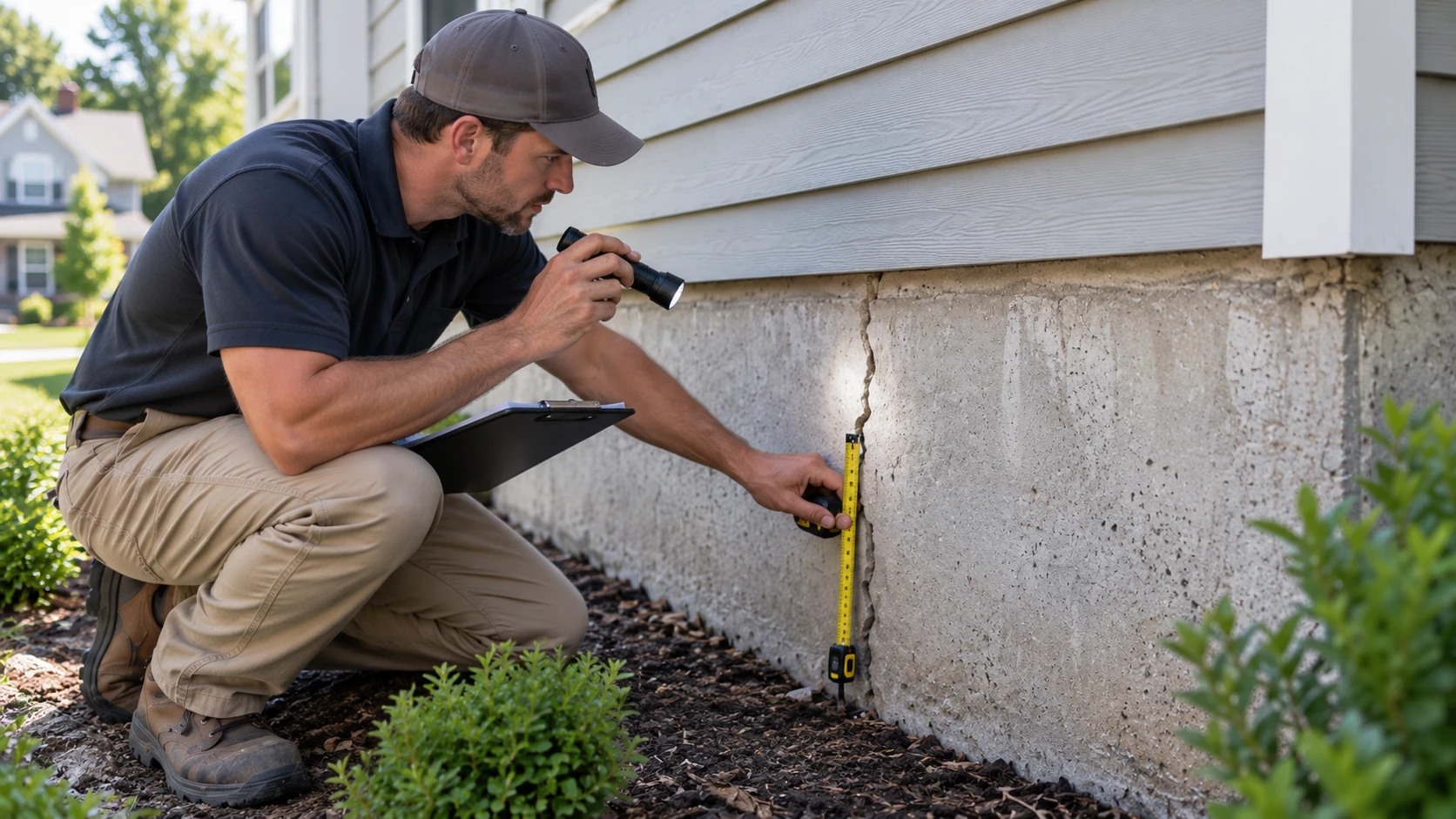
How Professionals Evaluate Foundation Cracks
A professional foundation inspection generally considers much more than the crack itself.
The evaluator may review the crack’s location, pattern, direction, surrounding materials, displacement, moisture conditions, and evidence of structural movement.
Other parts of the home may also be examined to determine whether the foundation symptoms are isolated or part of a broader pattern.
The exterior can provide additional information. Drainage, grading, soil conditions, retaining walls, vegetation, and nearby settlement may all contribute to understanding what is happening.
The main goal is to answer three questions:
- What likely caused the crack?
- Is the condition stable or still moving?
- Does anything need to be repaired, stabilized, monitored, or investigated further?
Homeowners can also review available residential foundation services to understand the different types of foundation, concrete, crawl space, and structural problems that may require professional attention.
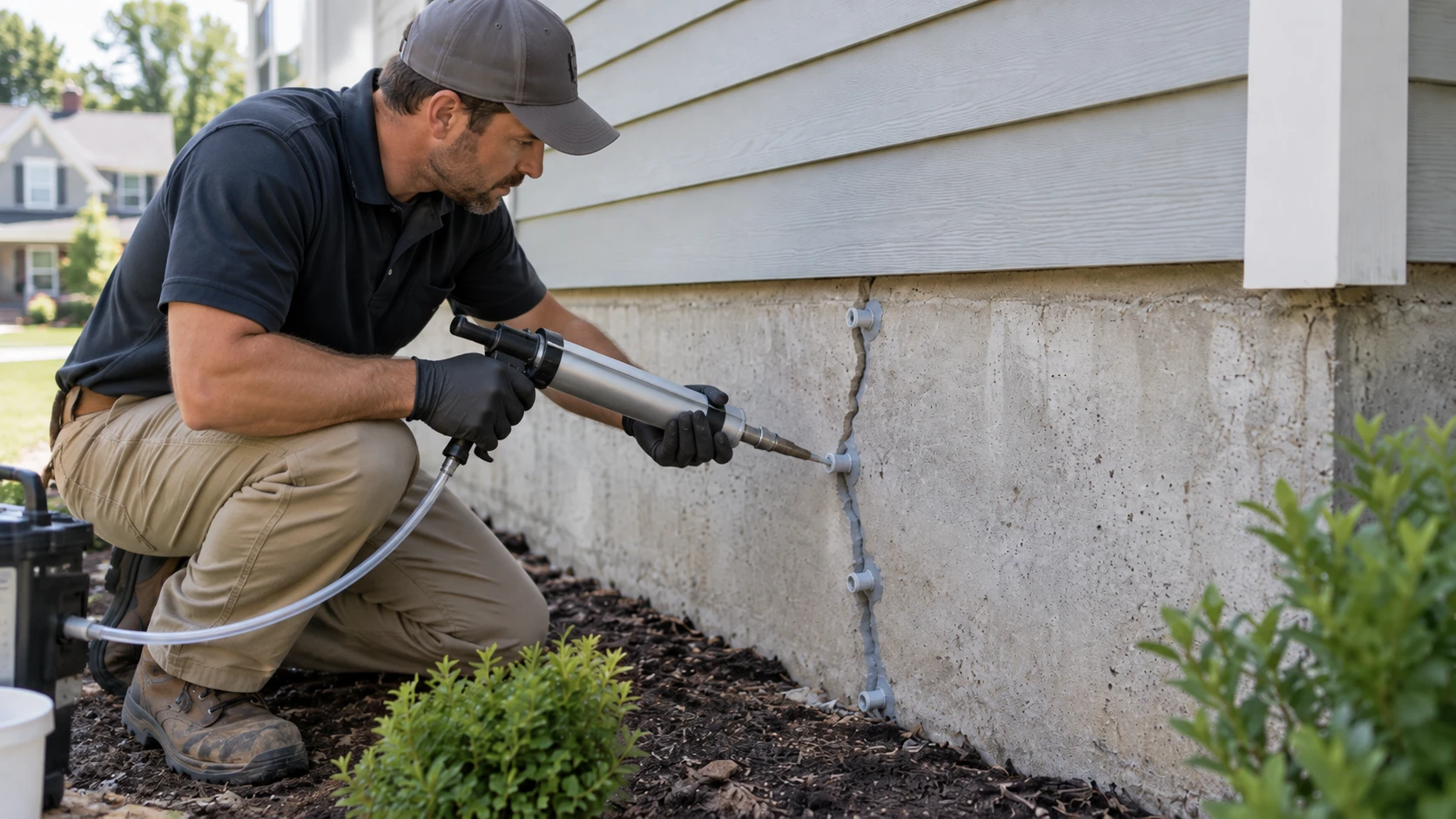
Can Foundation Cracks Be Repaired?
Many foundation cracks can be repaired, but there is no single repair method that is appropriate for every crack.
The right approach depends on why the crack formed.
Crack Sealing or Injection
Some cracks may be treated with sealing or injection methods when the main concern involves the crack itself or water intrusion.
However, filling a crack does not necessarily correct structural movement.
If the wall or foundation is continuing to move, the cause of that movement usually needs to be addressed before cosmetic repairs can provide a lasting result.
Foundation Stabilization
When cracking is connected to settlement or foundation movement, stabilization may be required instead of surface patching.
Foundation stabilization services are relevant when long-term structural support is needed.
The appropriate system depends on the foundation type, movement pattern, soil conditions, and findings from the inspection.
Wall Stabilization
Foundation walls affected by lateral pressure may require wall stabilization.
Solutions can differ depending on whether the wall is cracked, bowed, leaning, or displaced.
A professional inspection helps determine whether the issue involves minor cracking, structural movement, moisture conditions, or a combination of several factors.
Why Patching the Crack May Not Solve the Problem
It is tempting to fill a foundation crack as soon as it appears.
That may improve appearance or reduce water entry in some situations, but it does not necessarily address the cause.
Imagine a crack developing because part of the foundation continues to settle.
Filling the opening may hide the visible symptom temporarily, but if movement continues, the crack may reopen or another crack may develop nearby.
The same principle applies to a bowed foundation wall. Covering the crack does not remove the pressure that caused the wall to move.
Successful repair starts with understanding the condition first and selecting a solution that matches the cause.
When Should You Have a Foundation Crack Inspected?
If you cannot confidently determine whether a crack is stable, having it inspected can remove uncertainty.
Professional assessment becomes particularly important when the crack is combined with visible movement or other structural symptoms.
Consider arranging an inspection when:
- The crack has recently appeared
- You believe it is growing
- The foundation wall is bowing
- One side of the crack is displaced
- Water repeatedly enters through the crack
- Multiple areas of the home show signs of movement
- Floors appear uneven
- Doors and windows have changed noticeably
- Previous crack repairs have failed
- You simply cannot determine whether the condition is cosmetic or structural
An inspection does not automatically mean major repairs will be recommended.
Its purpose is to understand what is happening so the response can be based on the actual condition rather than assumptions.
What Should You Do When You Discover a Foundation Crack?
Start by documenting the condition before altering it.
Take photographs from close range and farther away so the surrounding wall remains visible. Record where the crack is located and whether there is moisture, staining, bowing, or displacement nearby.
Next, look through the rest of the property for related changes.
Check floors, walls, ceilings, doors, windows, crawl spaces, basement walls, and exterior foundation areas.
Avoid immediately covering the crack if you are concerned about movement. Leaving the condition visible until it has been assessed can make evaluation easier.
If the crack is changing, connected with wall movement, or accompanied by other structural symptoms, arranging a professional inspection is usually the most reliable next step.
Questions Homeowners Commonly Ask About Foundation Cracks
Are foundation cracks normal?
Some foundation cracks can occur because concrete shrinks and building materials respond to moisture, temperature, and loading. Other cracks may result from foundation movement. The pattern and surrounding conditions should be considered together.
Is a vertical foundation crack serious?
Not necessarily.
Some vertical cracks are associated with concrete shrinkage, while others can occur because of movement. Widening, displacement, recurring moisture, or nearby structural symptoms make professional assessment more important.
Are horizontal foundation cracks serious?
Horizontal cracks deserve closer attention, particularly when they appear with inward wall movement or bowing.
The underlying cause should be evaluated rather than assuming the crack is cosmetic.
Is a stair-step crack dangerous?
A stair-step pattern can be associated with movement in masonry foundations.
The significance depends on whether the wall is displaced, whether the crack is growing, and whether other symptoms of settlement are present.
Can foundation cracks cause water leaks?
Yes, cracks can sometimes provide a path for moisture to enter a basement or foundation area.
Water entry does not automatically mean the foundation is structurally unstable, but both the crack and the exterior moisture conditions should be investigated.
Can I just fill a foundation crack myself?
Some minor cracks may be sealed, but filling the crack does not explain why it formed.
If movement, displacement, water intrusion, or structural concerns are present, identifying the cause before repairing the surface is a better approach.
Should I monitor a foundation crack?
Monitoring can provide useful information when a crack appears stable and no urgent structural symptoms are present.
Take dated photographs and watch for changes. If you notice continued movement, widening, displacement, wall bowing, or additional symptoms, arrange a professional assessment.
Planning Your Next Step
Foundation cracks should be evaluated based on their complete context rather than appearance alone.
Some cracks develop from normal concrete behavior. Others can be connected to settlement, soil movement, moisture conditions, slab problems, or structural changes.
Direction and width provide clues, but they do not tell the whole story. Changes over time, surrounding symptoms, foundation material, drainage conditions, and visible movement provide a clearer picture of what may be happening.
If you have discovered a foundation crack and are unsure whether it needs repair, monitoring, or stabilization, book a foundation inspection with Tar Heel Foundation Solutions. A professional assessment can help identify the likely cause and determine the most appropriate next step.